
Online courses in Nigeria have become an essential tool for anyone, from busy professionals to ambitious students, looking to pick up new skills or get ahead in their careers. As the job market evolves, especially in bustling hubs like Lagos and Abuja, learning online isn’t just a convenience—it’s a practical way to stay competitive. This guide gives you an actionable roadmap to investing smartly in your future.
The Digital Learning Shift in Nigeria
The swing towards digital education in Nigeria is more than just a passing phase; it’s a fundamental change in how we approach learning and career growth. For a long time, the only option was a traditional classroom, but technology has opened the door to a world of new possibilities.
This shift is driven by a need for skills that are valuable on a global scale. Professionals in fast-paced cities like Lagos need to upskill without putting their careers on hold, while entrepreneurs across the country are hunting for the specialised knowledge needed to launch and grow their ventures. Online learning fits perfectly into these modern demands.
Why the Sudden Growth?
What’s behind this massive surge in online learning? A few key factors are at play. The global approach to learning is changing, as detailed in this analysis of the digital era of courses, learning, and teaching. The rise of remote work has also blurred geographical lines, creating a global talent pool where continuous learning is necessary to stay competitive.
The online education scene in Nigeria has seen incredible growth, largely because learners value convenience and flexibility. In fact, over 60% of online students say a flexible schedule is the main reason they choose digital courses over a traditional classroom.
The numbers tell the story. In the last five years, better internet access and a growing, tech-savvy youth population have turbocharged the market. Statista’s research projects that by 2025, hundreds of thousands of Nigerians will be actively using online learning platforms. You can discover more insights about Nigerian online education trends on Statista.
As technology integrates deeper into education, new tools are emerging to help students. If you’re curious, you can learn more about AI for Nigerian students in our article. This guide will help you navigate this exciting new reality.
The Practical Upside: How Online Learning Really Pays Off
Talking about the benefits of online courses in Nigeria is one thing, but seeing how they deliver real-world results is what truly matters. It’s not just about convenience; it’s about tangible advantages that can reshape your career, your finances, and your potential.
Let’s move past the buzzwords and look at the practical, day-to-day impact.

Alt text: A person sitting at a desk with a laptop, deeply engaged in an online course.
You Are in Complete Control of Your Schedule
This is the biggest game-changer. Traditional education dictates your schedule, forcing you to build your life around it. Online learning flips that script entirely. You decide when and where you study.
Practical Example:
Consider Ade, a banker in Lagos. He sees the explosion in fintech and wants to transition, but he can’t just quit his job. Attending physical classes after a gruelling workday and navigating Lagos traffic is out of the question.
Instead, he enrolls in an online fintech course. His lunch breaks become 30-minute study sessions. His commute home on the bus is now a chance to watch a lecture. He puts in two focused hours in the evening after his kids are asleep. This is the power of flexibility—gaining valuable new skills without putting your life, or your income, on hold.
It’s Far Kinder to Your Wallet
Cost is a massive factor for most of us. Online courses slash many of the extra expenses that come with attending a physical institution.
Just think about the savings over a six-month course:
- No More Commuting: You can say goodbye to daily transport fares or fuel costs. That alone could save you anywhere from ₦30,000 to ₦60,000, or even more.
- Fewer Material Costs: Most online programmes provide digital textbooks and resources, eliminating the need to buy expensive physical books.
- Zero Accommodation Worries: If the best school for your desired skill is in another city, you don’t have to worry about the high cost of hostels or renting a room.
The money you would have spent on just getting to your education can now be invested directly into the learning itself. It’s a smarter financial move.
Learn from the World’s Best, Right from Home
Online learning tears down geographical walls. It connects you with specialised knowledge and industry experts you’d likely never have access to otherwise.
Want to learn about cutting-edge UX design, advanced data science, or ethical hacking? You can now learn directly from professionals leading these fields globally. This isn’t just about getting a certificate; it’s about gaining a world-class perspective that sets you apart.
Gaining globally recognised skills opens up new career paths that are no longer limited by your physical location. It prepares you to compete for roles not just in Nigeria, but worldwide.
This is more important than ever, with so many global companies hiring remotely. Building these in-demand skills online is your first, crucial step. To see where these skills can take you, check out our guide on finding international remote jobs in Nigeria.
Choosing Your Ideal Learning Platform

Alt text: A person comparing different online course platforms on a laptop and tablet.
With a sea of options out there, picking the right platform for online courses in Nigeria can feel like a huge task. The secret is not finding the single “best” platform, but finding the best fit for you.
The trick is to match your career goals and learning style with what each platform offers. To make it easier, let’s break down the major players into a few key groups.
Global Giants for Academic Credentials
Platforms like Coursera and edX are the titans of online learning. They partner with top-tier universities and global companies to offer highly structured programmes, from individual specialisations to full online degrees.
- Who are they for? Individuals seeking formal qualifications with a globally recognised name on the certificate. If you’re looking for a deep, academic dive into subjects like data science or business management, this is your zone.
- The ideal learner: A professional aiming for a promotion, a student hungry for university-level knowledge, or anyone who knows a certificate from a prestigious institution will open doors.
- How you pay: Most operate on a subscription model (monthly or yearly) or a one-time fee for an entire programme. They often have financial aid available, so be sure to check.
Practical Skill Hubs for Hands-On Learning
Then you have bustling marketplaces like Udemy and Skillshare. Imagine a massive library where industry experts from every corner of the world create and sell courses on just about anything—from coding in Python to mastering graphic design. Here, the focus is less on academic theory and more on putting skills into practice.
These platforms are your go-to for picking up a specific, tangible skill—fast. If your goal is to learn Photoshop over a weekend or get a website up and running in a week, start your search here.
Practical Example:
A new entrepreneur could jump on Udemy to learn the basics of digital marketing and start applying those tactics to their business the very next day. If that sounds like you, our guide on digital marketing for beginners is a great next step.
Local Innovators for Professional Services
Finally, don’t overlook homegrown platforms built with the Nigerian market in mind. A fantastic example is TERAWORK, which not only connects freelancers with clients but also offers a solid selection of courses designed to give Nigerian professionals the skills they need to compete locally.
These local players often have their finger on the pulse of the Nigerian job market, offering courses that speak directly to what employers in Lagos, Abuja, and Port Harcourt are looking for.
- Who are they for? Professionals who need skills directly relevant to the Nigerian economy, freelancers looking to add new services, and anyone who appreciates content with local context.
- The ideal learner: The Nigerian freelancer, small business owner, or job seeker who needs to show local employers they have what it takes.
- How you pay: It’s usually a straightforward, one-time payment for each course.
Comparing Popular Online Learning Platforms for Nigerians
Here’s a quick rundown of the leading platforms to help you decide which is the best fit for your learning goals and budget.
| Platform | Best For | Typical Price Range | Accreditation Level |
|---|---|---|---|
| Coursera | University-level courses, specialisations, and degrees from recognised institutions. | ₦15,000 – ₦75,000 per month (subscription) | High (University & Corporate Partners) |
| edX | In-depth academic programmes and professional certificates from top universities. | ₦50,000 – ₦300,000 per course/programme | High (University & Corporate Partners) |
| Udemy | A massive range of practical, skill-based courses on almost any topic. | ₦5,000 – ₦25,000 per course (frequent sales) | Low (Individual Instructor Certificates) |
| Skillshare | Creative skills and project-based learning in short, digestible classes. | ₦10,000 – ₦25,000 per year (subscription) | Low (No formal accreditation) |
| TERAWORK | Skills specifically tailored for the Nigerian professional and freelancer market. | ₦10,000 – ₦50,000 per course | Varies (Focused on practical skills) |
Ultimately, the best platform is the one that gets you from where you are to where you want to be. Use this table as a starting point, but always dig deeper into the specific courses that catch your eye.
Budgeting for Your Online Education
Figuring out the cost of online courses in Nigeria is the first step in making a smart investment in your future. Prices can seem all over the map, but they generally follow clear patterns. Your mission is to find a course that gives you tangible value without straining your finances.
Some platforms, like Udemy, use a one-time purchase model. You pay once, and the course is yours for life. Others, such as Coursera, lean towards a monthly subscription, which unlocks a huge library of courses. It’s vital to know which model you’re getting into before you click “buy.”
Creating Your Learning Budget Step-by-Step
A clear budget removes the guesswork and lets you focus on learning. It’s a straightforward process that puts you in control.
- Calculate Your Total Education Fund: First, determine exactly how much you can comfortably set aside each month for your education. Be realistic about your financial commitments.
- Factor in Hidden Costs: The course price is just the beginning. Consider potential extras, like specialised software, certification exam fees, or upgrading your internet plan.
- Research Pricing and Payment Options: Once you’ve chosen a course, dive deep into its payment structure. Do they have installment plans? It’s a good idea to review their pricing details for any subscription costs. If you’re using an international platform, knowing how to handle payments in foreign currency is crucial. Our guide on the right app to send money from USA to Nigeria can help make those transactions smoother.
- Track Your Spending: Keep a simple spreadsheet or note of every kobo you spend on your education. This isn’t about being stingy; it’s about staying on track and knowing when you might need to adjust your plan.
Finding Financial Support and Discounts
Don’t assume the listed price is final. Many platforms offer ways to reduce the cost, making top-tier online courses in Nigeria more accessible than you think.
Practical Example:
A certified data science programme can run from ₦474,803 to ₦1,187,144. However, it’s common to see big discounts. A course originally priced at ₦1,375,000 might be reduced to ₦861,249, making it a more realistic investment.
Many global players, like Coursera and edX, offer financial aid or scholarships. If you can’t cover the full fee, it’s always worth checking out their application process—it’s usually simple and could save you a significant amount.
Also, consider your current employer. Many companies have a budget for professional development. If you can build a solid case showing how a new course will directly benefit the company and improve your job performance, they might be willing to cover the cost.
Actionable Takeaways
- Identify Pricing Models: First, figure out if a course is a one-off payment or a recurring monthly subscription.
- Look Beyond the Sticker Price: Always hunt for financial aid options, scholarships, or seasonal sales on platforms like Coursera and Udemy.
- Draft a Sponsorship Proposal: Create a short, clear document for your manager explaining how a specific online course will boost your performance and benefit the team.
- Set Up Payment Alerts: Use your banking app or a budgeting tool to remind you before a subscription renewal fee is deducted.
How to Select the Right Course for Your Career
With thousands of online courses available in Nigeria, picking one can feel overwhelming. By approaching it strategically, you can find a course that accelerates your career. Think of it as planning a critical project: the mission is to build a direct bridge from where you are today to where you want to be.
This isn’t about chasing trends or the cheapest deal. It’s about finding the perfect fit for your unique career goals. Let’s walk through a clear, step-by-step process.
Step 1: Pinpoint Your Career Ambition
Before you open a browser, define your destination. What, exactly, do you want to achieve? Vague goals like “get better at my job” are not actionable. Get specific.
Are you trying to:
- Climb the ladder at your current company? (e.g., move from a Junior Developer to a Mid-Level role)
- Switch careers entirely? (e.g., transition from customer service to digital marketing)
- Master a specific skill to boost your freelance income? (e.g., add video editing to your content writing services)
Practical Example:
Meet ‘Bayo,’ an IT support specialist in Abuja. His goal isn’t just to “learn more about tech.” His ambition is sharp and clear: “To become a cybersecurity analyst within the next 18 months.” This single sentence now acts as his compass, guiding every decision.
Step 2: Research In-Demand Skills
With your goal locked in, it’s time to investigate. Figure out what skills Nigerian employers are actually hiring for right now. The best place for this is on local job boards like Jobberman or MyJobMag.
Bayo heads to these sites and searches for “Cybersecurity Analyst” positions. He carefully reviews 10-15 job descriptions, noting the skills and certifications that appear repeatedly. He sees patterns—terms like “CompTIA Security+,” “network security,” “ethical hacking,” and “SIEM tools” come up again and again. This list becomes his personal curriculum roadmap.
Getting started with these courses is usually a breeze.
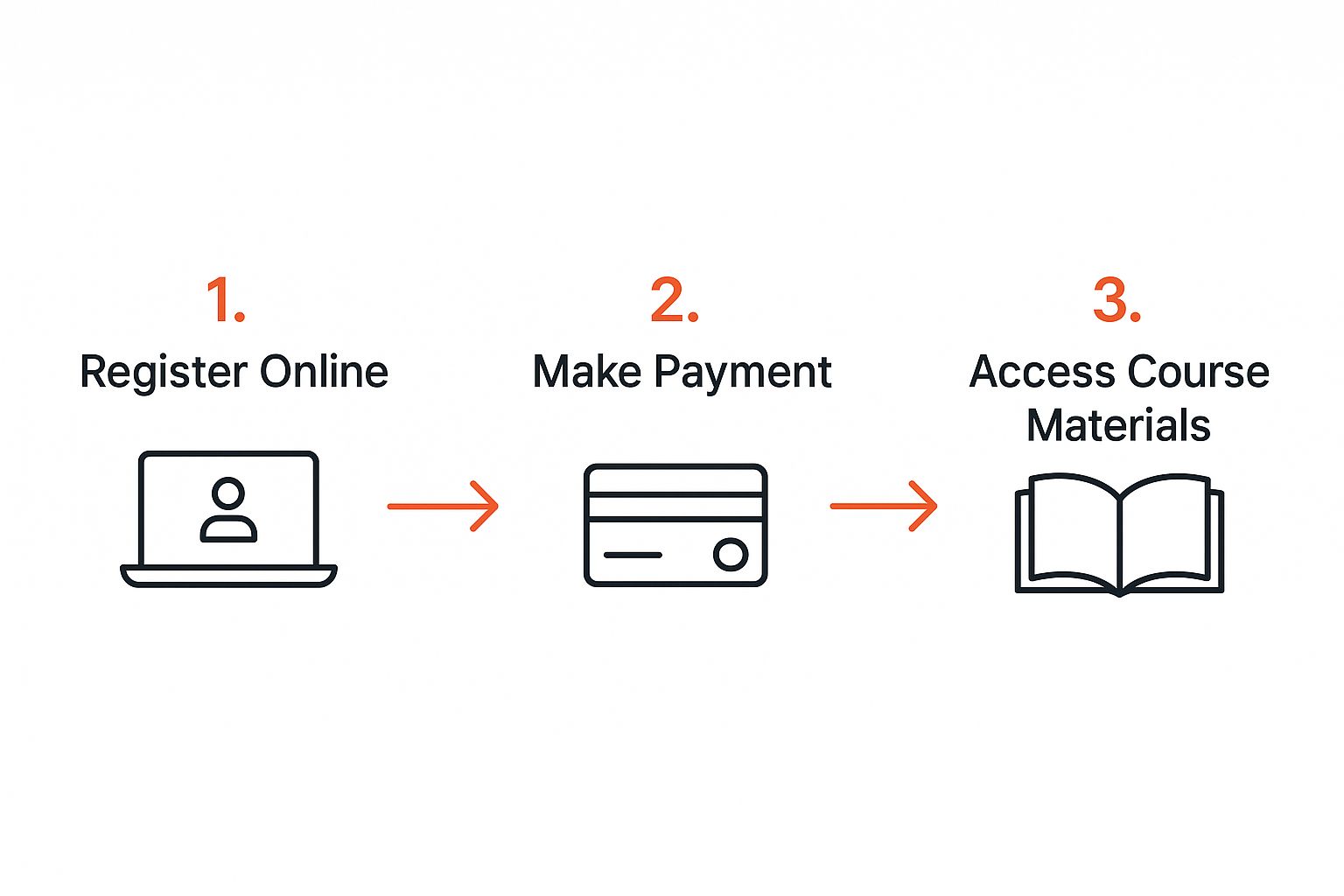
Alt text: Infographic showing a three-step process for online course access: Register online, Make payment, and Access course materials.
This straightforward process is a major advantage of online learning, cutting out administrative hassle.
Step 3: Evaluate the Course and Instructor
Now you’re ready to look at specific online courses. Your goal is to find programmes whose modules directly align with the skills you researched. Don’t just glance at the course title; dig deep into the syllabus.
A course in a hot field like data analysis can be a fantastic way to upgrade your skills. Short online statistics and data analysis courses are gaining traction in Nigeria, with options ranging from a few hours to more intensive 30-hour programmes. For example, a 12-hour course might cost around ₦42,644, while a shorter one could be closer to ₦40,221—and platforms often run big discounts. You can browse some of these data analysis options on Laimoon.
Beyond the curriculum, check out the instructor. Look them up on LinkedIn. Do they have real industry experience, or are they purely academic? Read reviews from past students to get a feel for their teaching style. This is especially crucial if you’re aiming for one of the many data science jobs available and need practical, job-ready knowledge.
A course taught by a practicing professional with years of field experience is often more valuable than one taught by an academic with none. Industry insights are priceless.
Step 4: Verify the Certificate’s Value
Finally, ask a tough question: what is this certificate actually worth? Will Nigerian employers recognise it? A certificate from a globally known name like Google, IBM, or a major university on Coursera carries significant weight. For specialised certifications, like the CompTIA Security+ Bayo is aiming for, the issuing body is the gold standard.
Check if the course provider has partnerships with local Nigerian companies or industry groups. That’s a strong signal that their qualifications are respected in the local job market. The goal isn’t just to learn—it’s to earn a credential that actually opens doors.
Your Action Plan for Getting Started
You’ve seen what’s on offer, from the platforms to the costs. Now, let’s turn that information into action. It’s time to move from thinking about learning to actually doing it. This is about creating a simple, clear plan to kick things off right.

Alt text: A person writing an action plan in a notebook with a laptop nearby.
The idea here is to start your upskilling journey feeling confident and focused. Think of these next steps as your personal launchpad.
A Practical Checklist to Begin
Here are three simple things you can do this week to get the ball rolling.
- Define Your Main Goal: Get specific. Grab a pen and write down exactly what you want to achieve. Instead of “learn project management,” try: “I want to become skilled in using Asana for project management so I can apply for a team lead position in the next nine months.” A clear target makes every other decision easier.
- Shortlist Three Platforms: Based on your needs and budget, pick three platforms that seem like a good fit. For example, you might look at Coursera for a globally recognised certificate, Udemy for a specific software skill, and TERAWORK for training tailored to the Nigerian market.
- Dig Into the Course Syllabus: From your shortlist, pick the most promising course and study its curriculum. Read through the modules. Does it teach the practical skills that Nigerian companies are hiring for? A good rule of thumb is to ensure at least 70% of the course content aligns directly with the goal you wrote in step one.
Following these steps helps you avoid feeling overwhelmed and ensures your first move is a smart one.
Frequently Asked Questions
It’s normal to have questions when exploring online courses in Nigeria. Let’s clear up some common ones so you can move forward with confidence.
Are Online Certificates Actually Recognised by Nigerian Employers?
Yes, they absolutely are—but the source of the certificate is what truly counts.
A certificate from a household name like Google, IBM, or a well-known university offering courses through Coursera carries significant weight. Nigerian employers know and trust these brands. On the other hand, a generic certificate from an unknown platform won’t open the same doors. The goal is to earn credentials that employers in Lagos, Abuja, and beyond already see as valuable.
Practical Example: A job applicant with a Google Analytics Certification on their CV will almost always stand out more than someone with a “Digital Marketing Basics” certificate from an unaccredited, unknown provider. The Google name is a recognised industry standard.
How Can I Actually Stay Motivated and Avoid Distractions at Home?
Staying focused while studying from home is tough. The secret isn’t just willpower; it’s about building a solid routine and a dedicated learning environment.
- Stick to a schedule: Treat your online course like a regular job or class. Block out specific hours on your calendar for study time and protect that time.
- Create a study zone: Find a quiet corner of your home that is only for learning. When you sit there, your brain gets the signal that it’s time to focus.
- Use the Pomodoro Technique: This simple productivity method is a lifesaver. You work in focused, 25-minute bursts with a 5-minute break in between. It’s fantastic for maintaining concentration without burnout.
What Are the Minimum Tech Requirements?
You don’t need a high-end computer to take an online course. A few basic tools are all you need for a smooth experience.
- A Reliable Device: A decent laptop or desktop computer is best. While you can watch videos on your phone, a bigger screen is essential for assignments, coding, or live classes.
- A Stable Internet Connection: This is non-negotiable. A spotty connection is incredibly frustrating. Invest in a reliable internet plan and consider a mobile hotspot as a backup.
- Basic Software: Most courses work in your web browser (like Chrome or Firefox). You’ll also need standard tools like a word processor (Microsoft Word or Google Docs) and a PDF reader.
Tools & Resources
- Time Management: Todoist (for task management), Forest (to stay off your phone).
- Job Boards: Jobberman, MyJobMag.
- Budgeting: YNAB (You Need A Budget) or a simple Google Sheet.
Further Reading
- AI for Nigerian Students: Top Use Cases
- How to Find International Remote Jobs in Nigeria
- The State of Digital Learning in Africa
Ready to create compelling content, generate stunning visuals, or even build a custom chatbot for your business? RichlyAI provides a powerful suite of AI tools designed to boost your productivity and creativity. Sign up for a free plan today!
