
The demand for skilled graphic designers who can work from anywhere is higher than ever. Whether you’re a seasoned professional in Lagos or a recent graduate in Abuja, navigating the vast landscape of online job boards can be overwhelming. This guide is designed to cut through the noise, providing a focused, practical resource for finding your next creative role without leaving your home. We’ve analysed and compiled the 12 best platforms to find legitimate, well-paying remote graphic design jobs in 2025.
This is more than just a list. For each platform, including local favourites like Jobberman and global giants like Upwork, we provide an honest breakdown of its key features, pros, and cons. You’ll get actionable insights and step-by-step guidance on how to optimise your profile and applications for each specific site. Our goal is to equip you with the strategic knowledge needed to find opportunities that match your unique skills and career aspirations.
As you prepare for a career in remote graphic design, cultivating an inspiring and efficient home office is key. Explore these 10 Home Office Design Ideas for Productivity to create a workspace that fosters creativity and focus. This guide will help you secure the job; your well-organised space will help you excel at it.
1. Indeed
As one of the world’s largest job aggregators, Indeed is an essential starting point for finding remote graphic design jobs due to its sheer volume of listings. Its key advantage is the powerful and specific search functionality, allowing you to filter results by “remote”, salary estimates, experience level (from intern to senior), and job type. This makes it easier to cut through the noise and find relevant opportunities.
User Experience and Features
The platform is free for job seekers, requiring no membership to search and apply. You can upload your CV to enable “Easily Apply” options on many listings, which streamlines the application process significantly. Employer reviews and salary insights are often included, providing valuable context before you even apply. While the interface is straightforward, the sheer number of jobs means you need to be strategic.
Practical Tips for Success
To maximise your search, use precise keyword combinations and set up alerts.
Step-by-step guide to setting up an effective search alert:
- Go to the Indeed homepage and type a specific role like
"remote UI designer"or"freelance brand designer"into the search bar. Use quotation marks to search for the exact phrase. - In the location field, type “remote”.
- Click the “Activate” button or look for a prompt to enter your email to create a job alert.
- Repeat this for 3-5 different job titles to cover your skills.
Be mindful that its broad aggregation can sometimes lead to mislabelled roles. Always double-check job descriptions to confirm a position is fully remote, as some “remote” tags might actually be for hybrid roles.
- Pros: Huge volume of jobs, strong filtering, free to use.
- Cons: Some listings are duplicates or mislabelled as remote.
- Website: Indeed Remote Graphic Designer Jobs
2. Dribbble Jobs
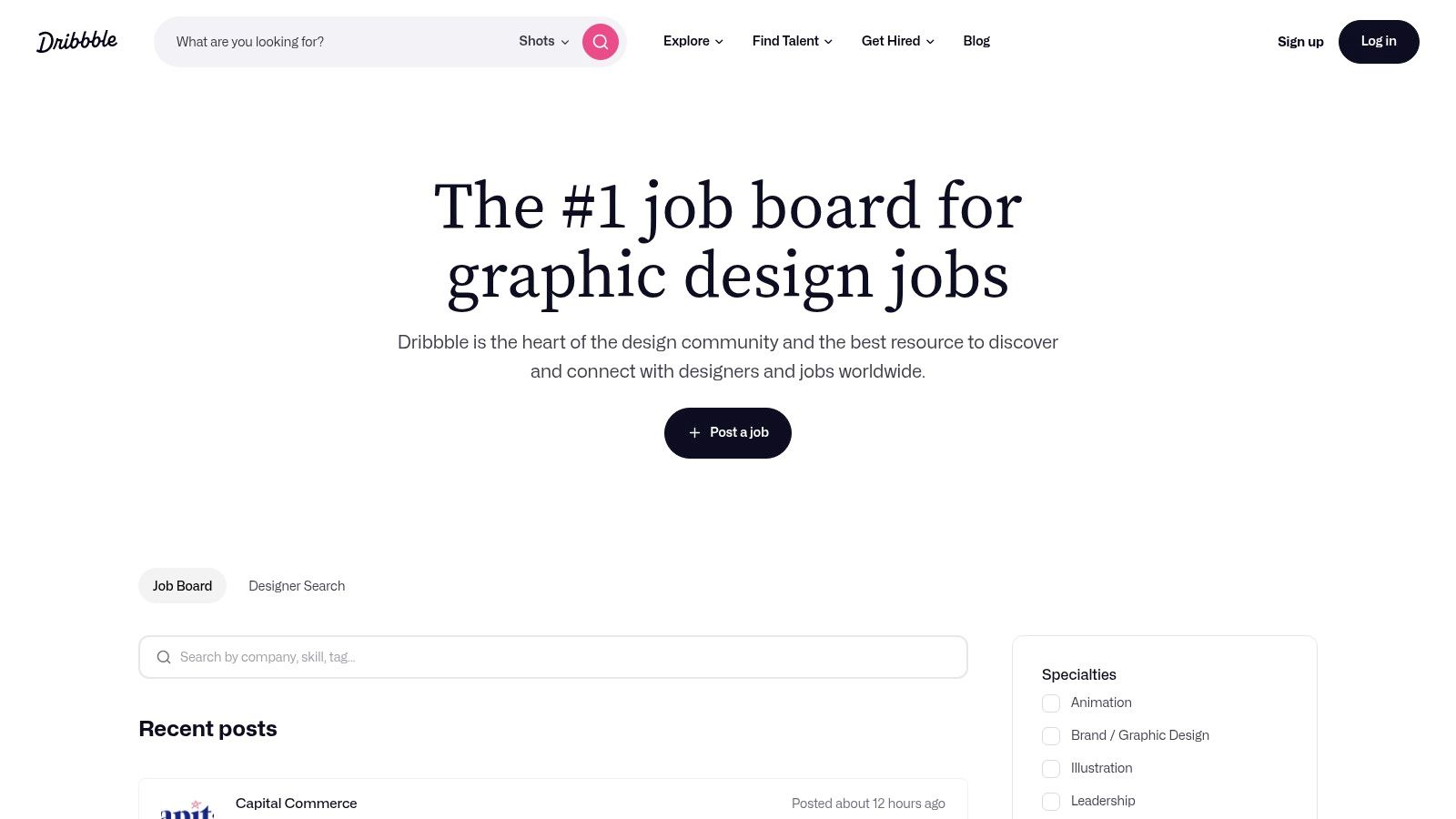
As a portfolio-first platform, Dribbble’s job board is a top-tier destination for visual creatives seeking high-quality remote graphic design jobs. Its primary strength lies in its curation of roles from design-centric companies, including tech start-ups and creative agencies, who value strong visual execution. The platform is particularly strong for product designers, UI/UX specialists, and brand identity designers.
User Experience and Features
Dribbble is free for job seekers, though a “Pro” subscription enhances your profile’s visibility to recruiters. The job board has a dedicated “Remote/Anywhere” filter that is frequently updated with new opportunities. A key feature is that applications are often linked directly to your Dribbble portfolio, encouraging employers to evaluate your work first, which can help bypass requests for unpaid test projects. The interface is clean and visually driven, reflecting its creative audience.
Practical Tips for Success
To stand out, ensure your Dribbble portfolio is meticulously curated. For example, instead of uploading 20 average projects, showcase your top 5-8 projects with multiple high-quality “shots” (images) for each. Provide detailed project descriptions explaining the client’s problem, your solution, and the tools you used. Actively engaging with the community by posting work regularly can attract inbound interest. Actionable insight: spend 15 minutes each day liking and commenting thoughtfully on other designers’ work to increase your profile’s visibility.
- Pros: High-quality, design-focused roles; portfolio-first approach attracts serious employers.
- Cons: Highly competitive market; many roles are mid-to-senior level.
- Website: Dribbble Jobs
3. Behance Joblist (Adobe)
As the portfolio platform of choice for many creatives, Behance’s job board is a natural hunting ground for remote graphic design jobs. Its unique advantage lies in its seamless integration with your creative profile. Recruiters can view your work and application in one place, making a strong, curated portfolio more impactful than a traditional CV. This direct link between your work and your job search is what sets Behance apart.
User Experience and Features
The platform allows you to apply directly using your Behance portfolio, a feature that significantly simplifies the application process. Job seekers can filter opportunities by freelance or full-time, location (including “Remote”), and creative fields like UI/UX or branding. A dedicated dashboard helps you track saved and applied-for jobs. Since Behance is part of the Adobe ecosystem, it feels like a native environment for designers.
Practical Tips for Success
To stand out, ensure your Behance portfolio tells a story. Practical example: for a branding project, don’t just show the final logo. Create a case study that includes the initial brief, mood boards, concept sketches, final logo variations, and mockups of the logo in use (on business cards, websites, etc.). This demonstrates your entire design process. As the platform is highly competitive, tailoring your application message to each role is crucial. Be cautious of vague job descriptions or requests for free work, as quality control can vary.
- Pros: Seamless portfolio-to-application workflow, integration with the Adobe ecosystem.
- Cons: Can be highly competitive, requires vigilance against low-quality postings.
- Website: Behance Joblist
4. Upwork
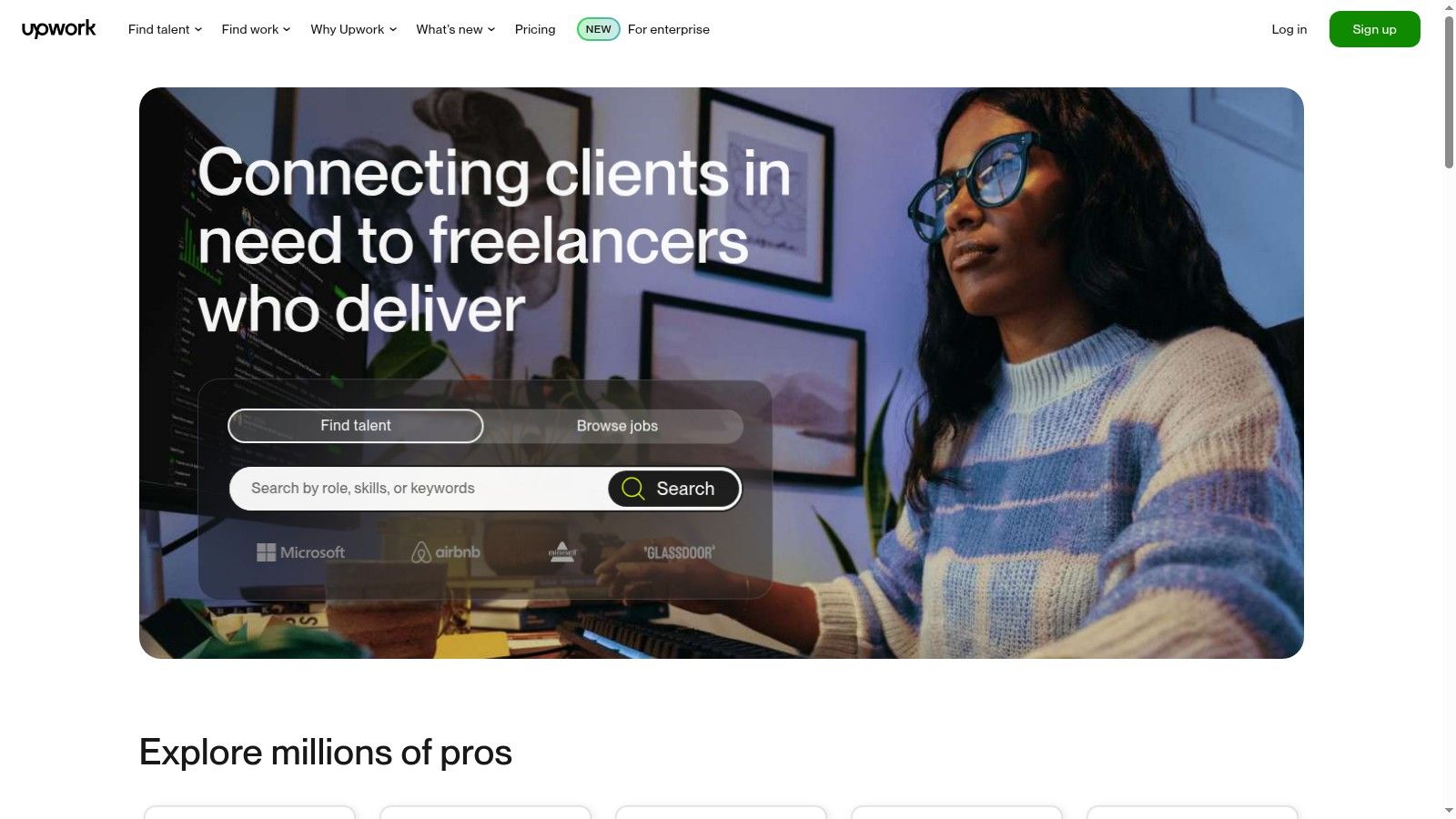
As the world’s largest freelance marketplace, Upwork is a cornerstone for designers seeking project-based remote graphic design jobs. It connects freelancers with a massive global client base looking for everything from quick logo designs to comprehensive brand identity projects. Its key differentiator is the structured, secure environment it provides for freelance work, offering tools that manage contracts and payments effectively.
User Experience and Features
Upwork’s platform is built around creating a professional freelance profile that showcases your portfolio, skills, and experience. Clients post jobs, and freelancers bid on them using “Connects,” a virtual currency. Standout features include payment protection through an escrow system and a Project Catalog, which allows designers to offer pre-packaged, fixed-price services. The platform’s interface is robust, with integrated messaging and milestone tracking to manage projects from start to finish.
Practical Tips for Success
To succeed, craft a highly-specialised profile and write tailored proposals. For example, instead of a generic title like “Graphic Designer,” use a specific one like “Brand Identity & Logo Designer for Tech Startups.”
Step-by-step guide for a winning proposal:
- Address the Client: Start with “Hi [Client’s Name]” if available.
- Hook: In the first two sentences, directly address their core problem. Example: “I see you’re looking for a modern logo for your new coffee shop. I specialize in creating minimalist brand identities that attract a younger demographic.”
- Show, Don’t Tell: Link to 1-2 relevant portfolio pieces.
- Call to Action: End with a clear next step, like “I can start this week. Would you be available for a quick 10-minute chat?”
For more details, explore our guide on how to start using AI tools on Upwork to enhance your workflow.
- Pros: Enormous demand and global client base, escrow and milestone payment tools enhance reliability.
- Cons: Competitive bidding requiring proposal credits (‘Connects’), wide variation in project quality and budgets.
- Website: Upwork
5. Fiverr
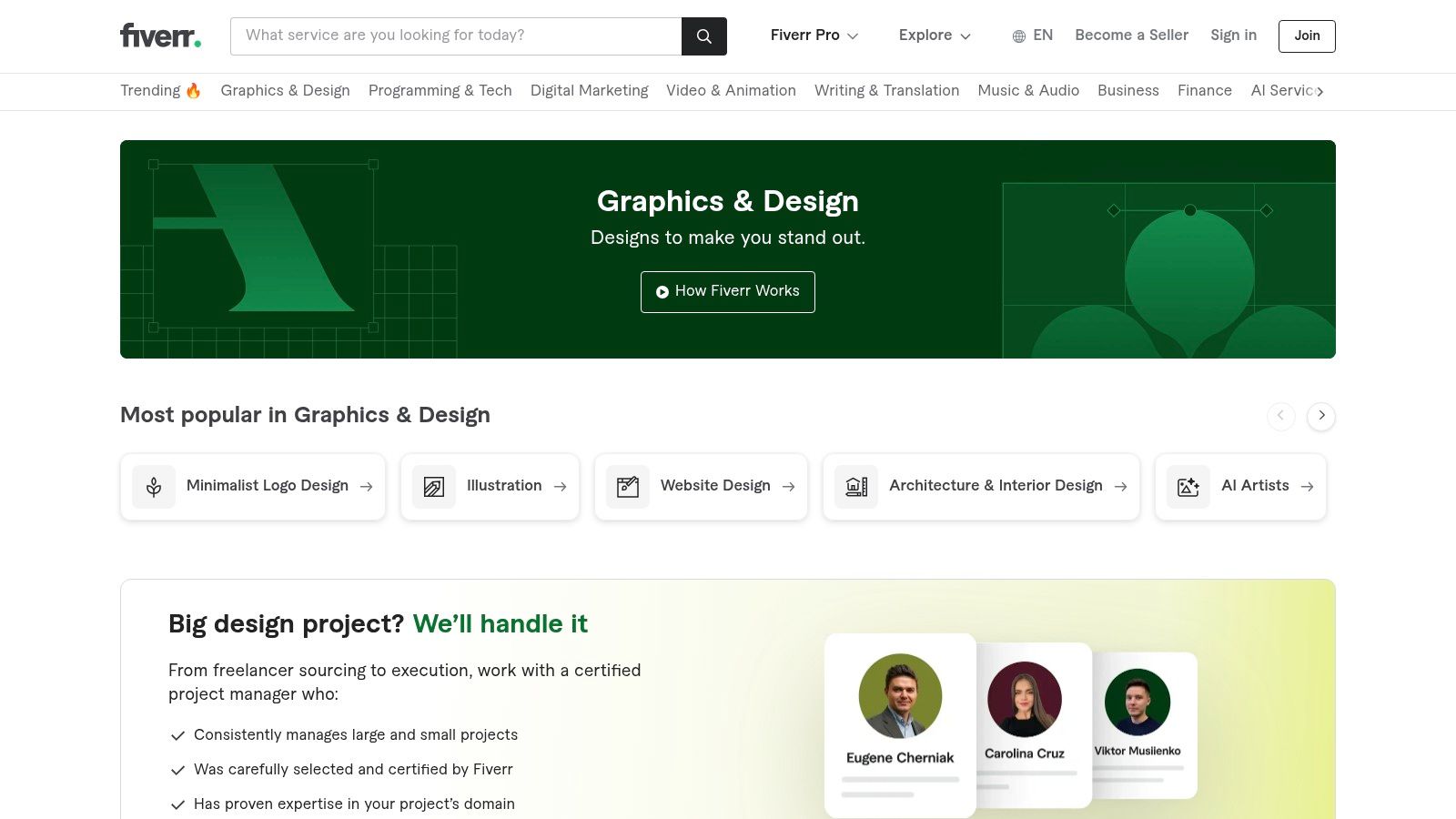
Unlike traditional job boards, Fiverr operates as a gig-based marketplace where you productise your skills into specific, fixed-price services. This model is ideal for designers seeking remote graphic design jobs with clear deliverables, such as logo creation, social media graphics, or flyer design. Instead of applying for roles, you create a compelling “gig” that attracts clients, giving you control over your offerings and pricing.
User Experience and Features
Fiverr’s interface guides you through creating service packages with tiered pricing (Basic, Standard, Premium), which simplifies the sales process. Buyers browse and purchase these gigs directly, and a built-in messaging system and order management dashboard keep projects organised. Features like Seller Plus and Fiverr Pro offer enhanced tools and a higher-profile marketplace for vetted professionals, although these come at a cost.
Practical Tips for Success
To stand out, build a specialised gig portfolio. Practical example: Instead of a generic “I will design anything” gig, create a niche service like “I will design professional Canva templates for Instagram.”
Actionable insight: Use video in your gig gallery. A short 30-second video explaining your process and showing off your work can increase engagement significantly. Initial pricing may need to be competitive to build reviews, but you can increase your rates as your reputation grows. Prompt communication is crucial for maintaining a high seller rating.
- Pros: Easy to get started, transparent project scopes and timelines, high volume of buyer traffic.
- Cons: Platform fees reduce final earnings, can be highly competitive on price.
- Website: Fiverr Graphics & Design Services
6. Toptal
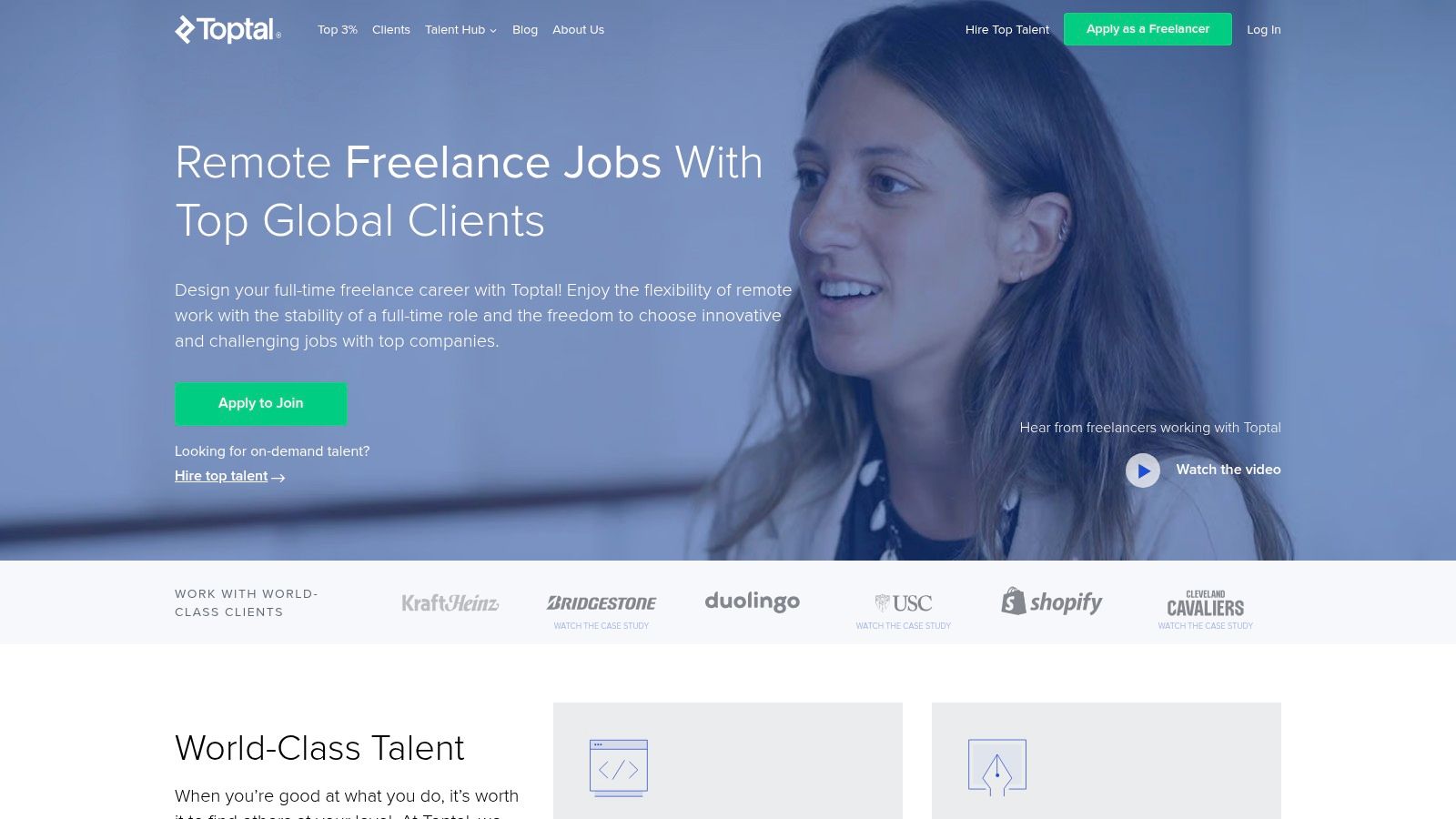
Toptal positions itself as an elite network for the world’s top freelance talent, making it a prime destination for experienced designers seeking high-value, long-term remote graphic design jobs. It differentiates itself by rigorously vetting both freelancers and clients, effectively eliminating the low-budget projects and bidding wars common on other platforms. This curated environment ensures that opportunities are well-paid and professionally managed from the start.
User Experience and Features
The platform is free for freelancers to join, but access is contingent on passing a demanding multi-stage screening process that accepts roughly 3% of applicants. This process includes a language and personality test, timed skill reviews, and live screening. Once accepted, designers gain access to a dedicated team that matches them with projects from top-tier clients like Shopify and Duolingo, handling contracts and billing so you can focus on design.
Practical Tips for Success
To succeed, you must first pass the screening.
Step-by-step preparation guide:
- Curate Your Portfolio: Select 3-4 in-depth case studies that show complex problem-solving.
- Practice Articulation: Be ready to walk an interviewer through one of your projects, explaining your design choices, challenges, and outcomes.
- Prepare for a Live Challenge: Refresh your skills with your primary design tool (e.g., Figma, Adobe XD). They may give you a small, timed design exercise.
When building your Toptal profile, emphasise your niche expertise, whether it’s in SaaS UI/UX or CPG branding, to attract the right matchers.
- Pros: Strong compensation rates and quality clients, support with billing and engagement setup.
- Cons: Rigorous screening process not suitable for beginners, variable supply of jobs depending on niche.
- Website: Toptal Freelance Jobs
7. We Work Remotely (Design)
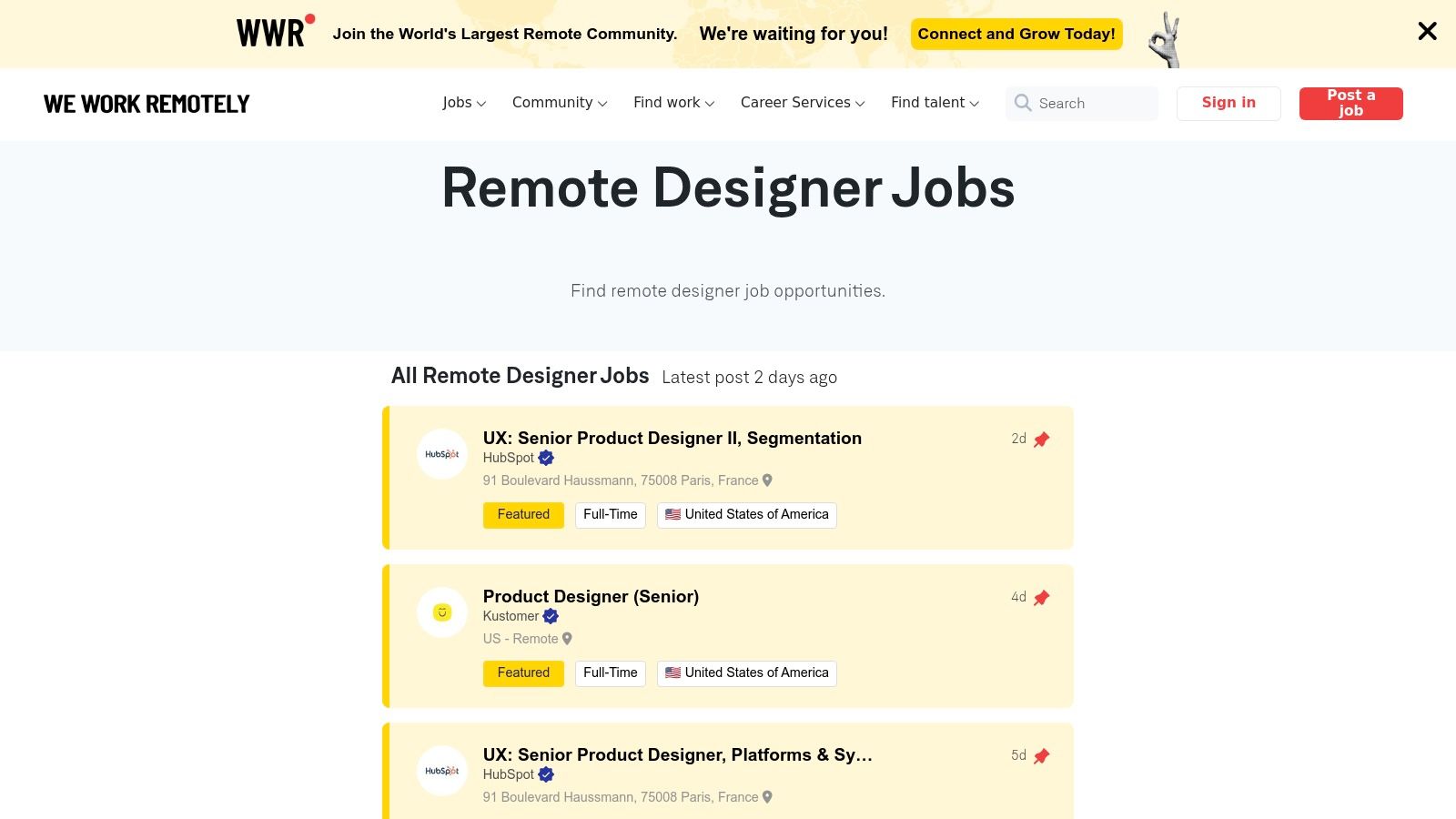
As one of the largest and most respected remote-only job boards, We Work Remotely is a top-tier destination for serious remote graphic design jobs. Its major differentiator is the strict curation of listings, ensuring every role is genuinely remote. The platform prominently features design opportunities, covering everything from UI/UX and product design to branding and motion graphics.
User Experience and Features
The interface is clean and straightforward, prioritising job content over clutter. A key feature is the clear tagging system that specifies regional restrictions (e.g., “Anywhere in the World” or “USA Only”), which saves applicants time. Many listings from established remote-first companies also include salary ranges, offering valuable transparency upfront. The platform is entirely free for job seekers, with no sign-up required to browse or apply.
Practical Tips for Success
To get the most out of We Work Remotely, be prepared to act fast. Actionable insight: Create a template for your cover letter and portfolio presentation that you can quickly customize for each application. For example, have a master portfolio in Figma or Google Slides, and for each application, duplicate it and reorder the projects to highlight the most relevant work first. Pay close attention to the timezone or regional requirements listed on each post to ensure you are eligible before applying.
- Pros: High concentration of remote-first employers, varied opportunities from startups to established companies.
- Cons: Job postings rotate quickly and can be time-limited, not all roles disclose compensation details.
- Website: We Work Remotely (Design)
8. Remote OK (Design)
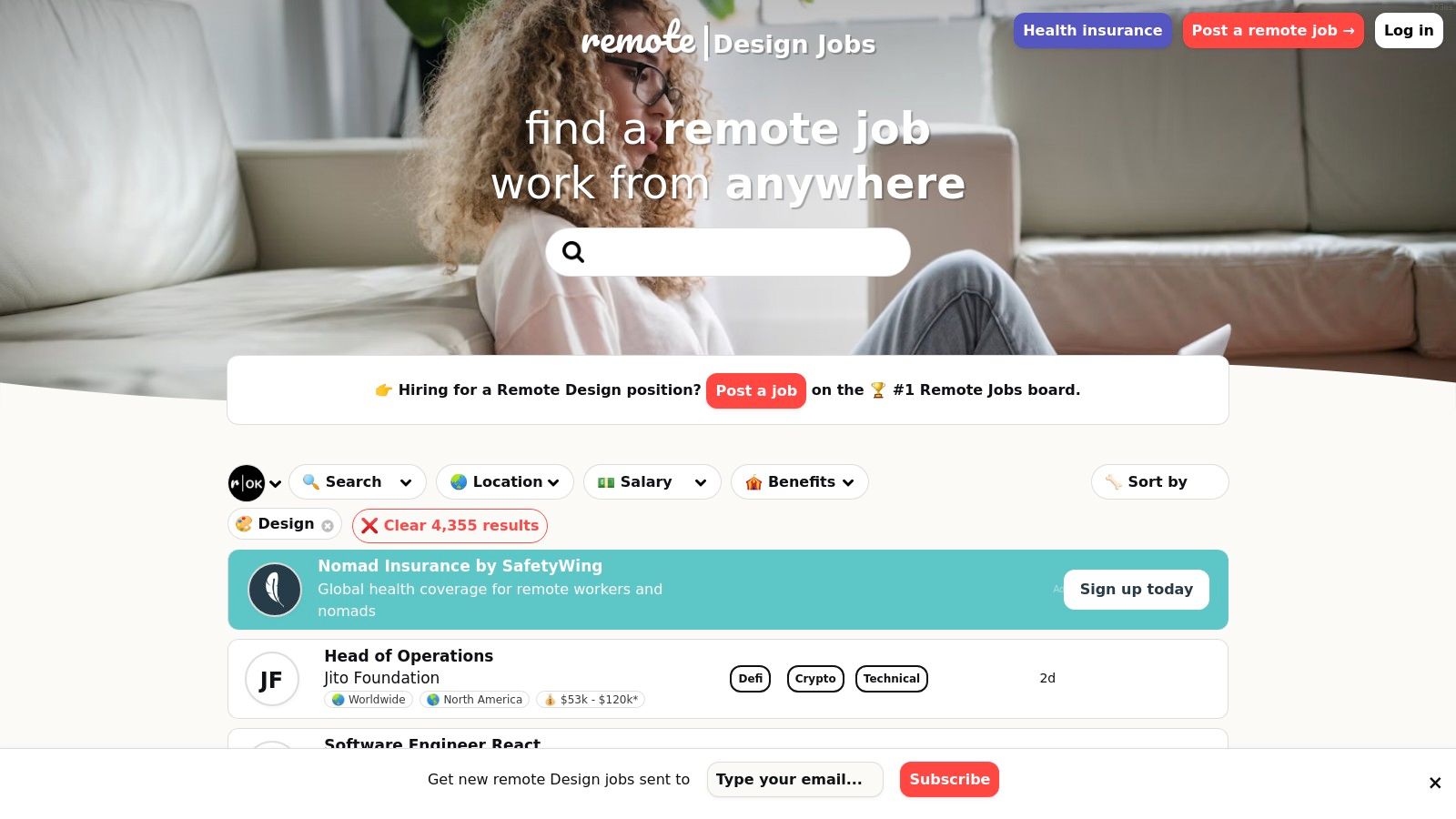
Remote OK is a popular job aggregator focused exclusively on remote work, and its dedicated design section is a goldmine for creatives. Its standout feature is transparency, with many listings including upfront salary ranges, tech stacks, and benefit tags. This allows you to quickly assess if a role aligns with your financial and technical needs before you even click to read the full description, saving you significant time in your search for remote graphic design jobs.
User Experience and Features
The platform’s interface is clean and data-driven, presenting job listings in a scannable, card-based format. Searching is free for job seekers, and the powerful filters let you narrow down roles by type (e.g., “Product Designer,” “UX/UI”), specific tags, and salary. Remote OK also includes helpful alerts about potential scams and provides job safety tips, adding a layer of security to your search. The platform is known for featuring jobs from globally distributed companies, making it ideal for designers anywhere in the world.
Practical Tips for Success
To get the most out of Remote OK, use its unique tags to your advantage. For example, if your primary tool is Figma, use the “Figma” tag filter to instantly find companies that use the same software. If you value work-life balance, filter by the “4-day work week” tag. Because it’s an aggregator, it’s a good practice to cross-reference the posting on the company’s own website to ensure it’s still active, as some older roles may occasionally remain listed on the platform.
- Pros: Transparent salary and benefit tags, strong filters for efficient browsing.
- Cons: Aggregator quality varies by source, some older posts may remain.
- Website: Remote OK (Design)
9. FlexJobs (Design/Graphic Design)
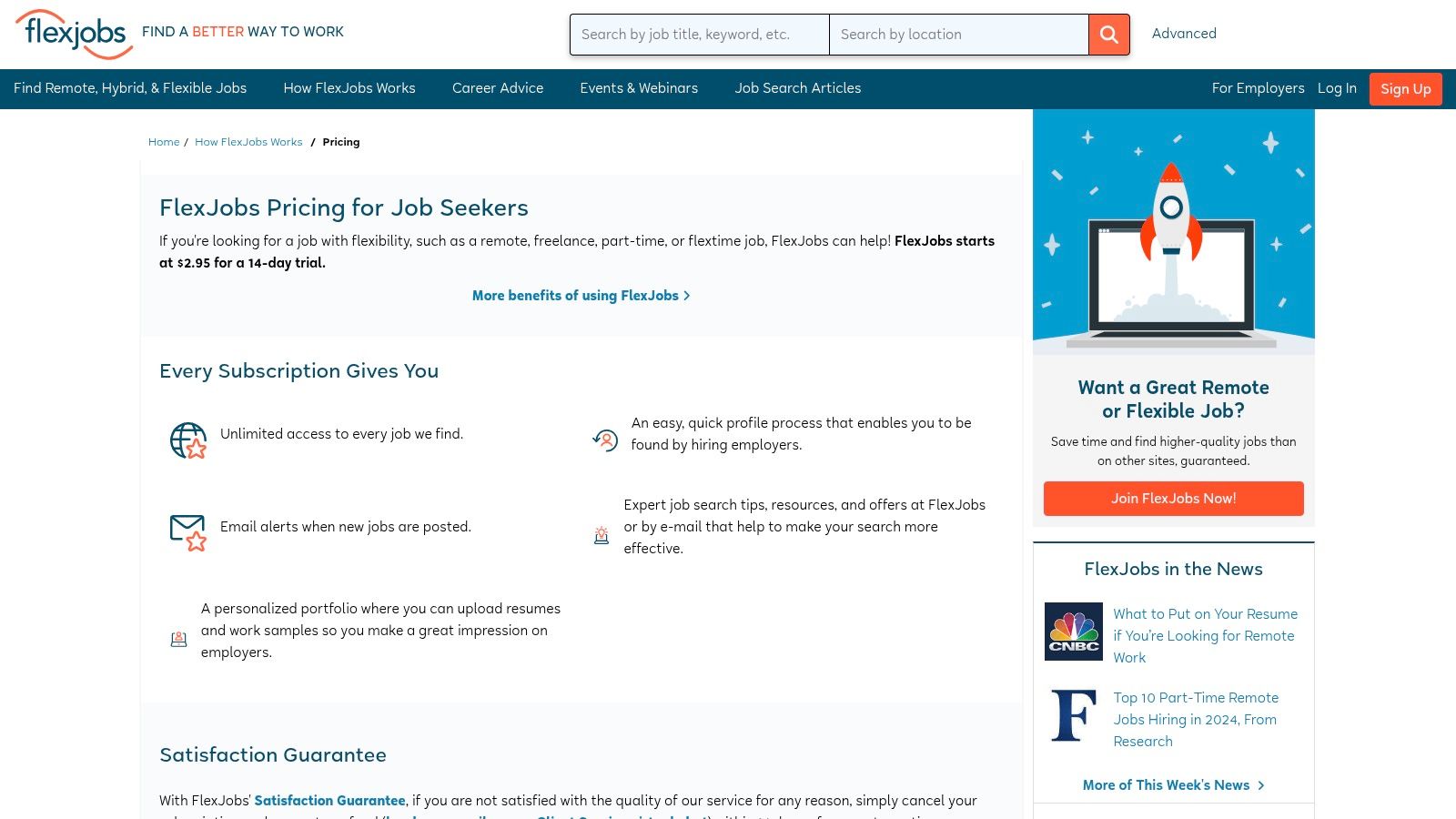
FlexJobs stands out as a premium, subscription-based job board dedicated exclusively to remote, hybrid, and flexible work. Its primary advantage for designers is that every single listing is hand-screened by a real person, which significantly reduces the risk of scams and low-quality offers. This curation process ensures that the remote graphic design jobs listed are legitimate and accurately described, saving you valuable time in your search.
User Experience and Features
To access full job details and apply, a paid membership is required, with plans starting from a weekly subscription. The platform’s interface is clean and user-friendly, featuring advanced filters that let you search by flexibility level (100% remote, remote with travel), career level, and whether the role is location-specific or “work-from-anywhere”. Beyond job listings, a membership unlocks access to career coaching, resume reviews, and skills tests.
Practical Tips for Success
Maximise your subscription by treating it as a focused, short-term investment. Actionable insight: Dedicate a specific week to your job search, buy the one-week pass, and use that time to apply to as many relevant, pre-vetted jobs as possible. Use the “Advanced Search” to filter for “work-from-anywhere” roles if you are looking for true location independence. Take the relevant skills tests on the platform; for instance, scoring high on an “Adobe Photoshop” or “Figma” test can make your profile more attractive to recruiters browsing the site.
- Pros: Highly curated and scam-free listings, strong focus on remote work, additional career support resources.
- Cons: Paid membership is required to apply, mixed user feedback on the value of the subscription.
- Website: FlexJobs
10. Remote.co (Design/Graphic Design)
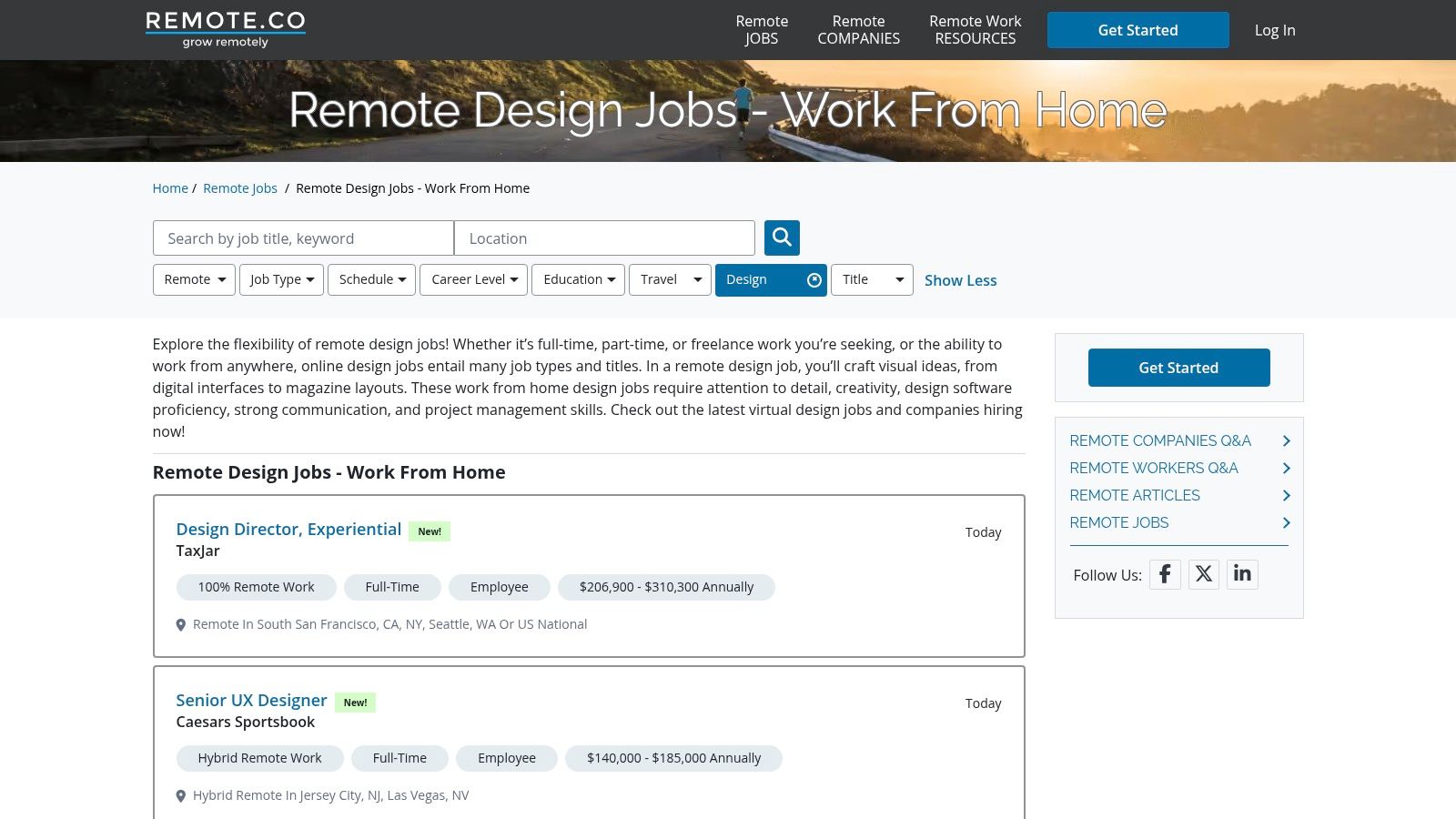
Curated by the team behind FlexJobs, Remote.co is a job board that lists exclusively remote positions, making it a highly targeted resource. Its dedicated design section filters out the noise of traditional job sites, presenting a clean, focused list of opportunities. The platform often features roles from well-regarded, remote-first companies and frequently includes compensation bands and timezone requirements directly in the listings.
User Experience and Features
Remote.co provides a straightforward, clutter-free user experience that is completely free for job seekers. You can browse all listings without an account, and applying typically redirects you to the company’s direct application page. Beyond jobs, the site offers valuable resources, including company Q&As and articles on mastering remote work, which can provide insights into a company’s culture and operations. The platform’s emphasis on quality over quantity is a key differentiator.
Practical Tips for Success
Check the site daily and use its resources strategically. Practical example: before applying for a job, check if Remote.co has a Q&A with that company’s CEO or Head of Remote. Reading this can give you valuable insights to mention in your cover letter, showing you’ve done your homework. For instance, you could write, “I was inspired by [CEO’s Name]’s comments on asynchronous communication, which aligns perfectly with my preferred work style.” Always verify the location details, as some partner feeds might occasionally pull in hybrid roles.
- Pros: Clean and exclusively remote-focused curation, variety of design roles, often shows salary ranges.
- Cons: Smaller job volume compared to mega-aggregators, some hybrid roles appear via partner job feeds.
- Website: Remote.co Design Jobs
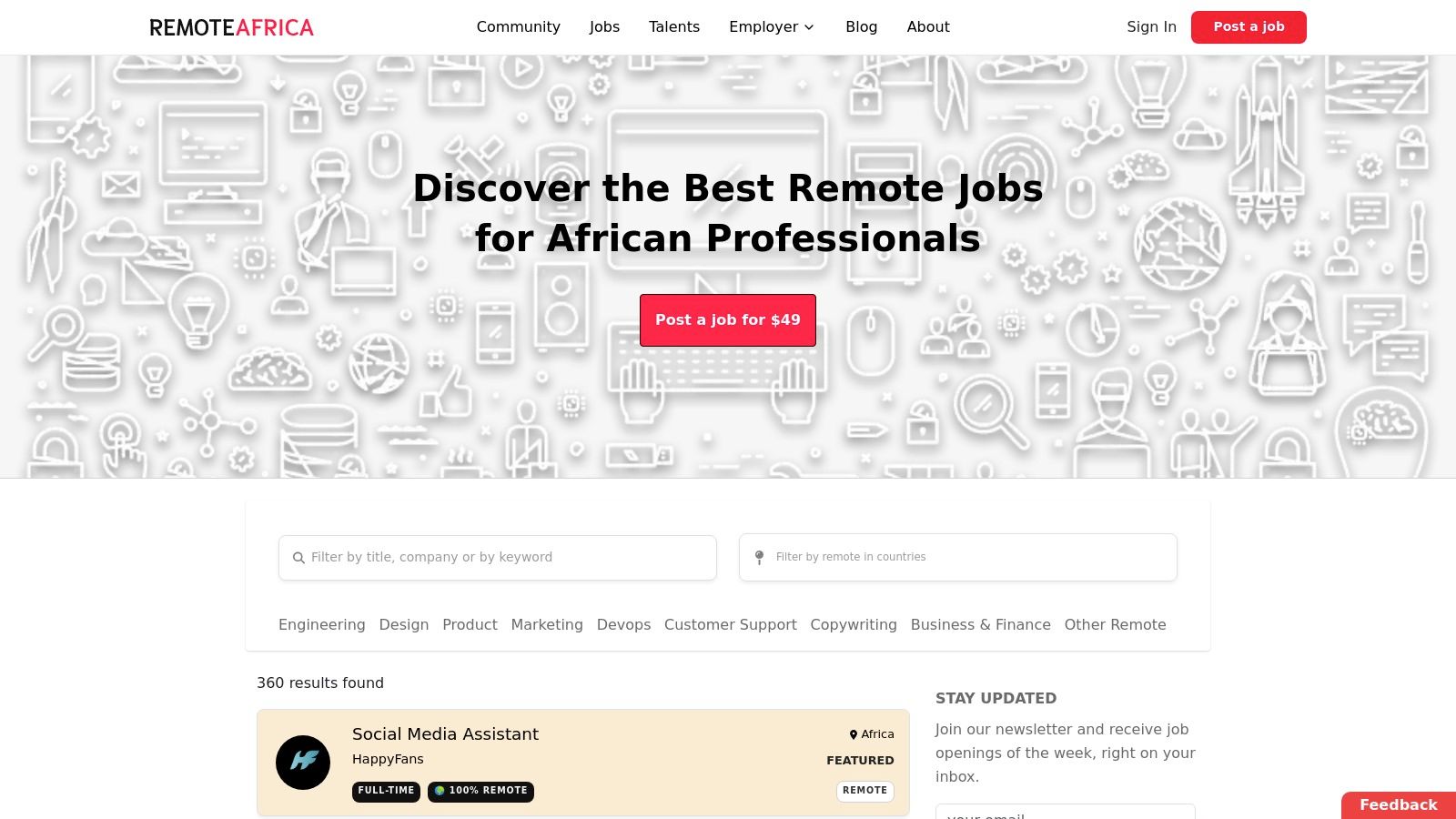
11. Remote Africa
For designers based in Africa, Remote Africa is a purpose-built platform that cuts through the global noise. It curates remote jobs from international companies specifically looking to hire talent within African time zones. This regional focus makes it an invaluable resource for Nigerian designers seeking roles where their location is an asset, not a hurdle. The listings often include opportunities that might not appear on larger, more generalised job boards.
User Experience and Features
The platform is free for job seekers and offers a clean, straightforward interface. Job listings clearly state whether a role is 100% remote or has time-zone constraints, which saves significant time during the search. The dedicated “Design” category filters for full-time, part-time, and contract-based remote graphic design jobs. An Africa-centric talent community and a regular newsletter also provide networking opportunities and highlight fresh openings.
Practical Tips for Success
To get the most out of Remote Africa, subscribe to their newsletter to have curated jobs sent directly to your inbox. Actionable insight: When applying, explicitly mention your location and time zone (e.g., WAT) as a benefit. For example, “Based in Lagos (WAT), I am well-positioned to collaborate with teams across both European and African markets.” Since the platform connects African talent with global companies, ensure your portfolio includes projects that demonstrate an international aesthetic and highlights your experience with diverse, remote teams.
- Pros: Regional relevance for Nigerian applicants, global roles from companies familiar with cross-border hiring.
- Cons: Smaller job volume compared to global boards, some roles require alignment with US/EU working hours.
- Website: Remote Africa
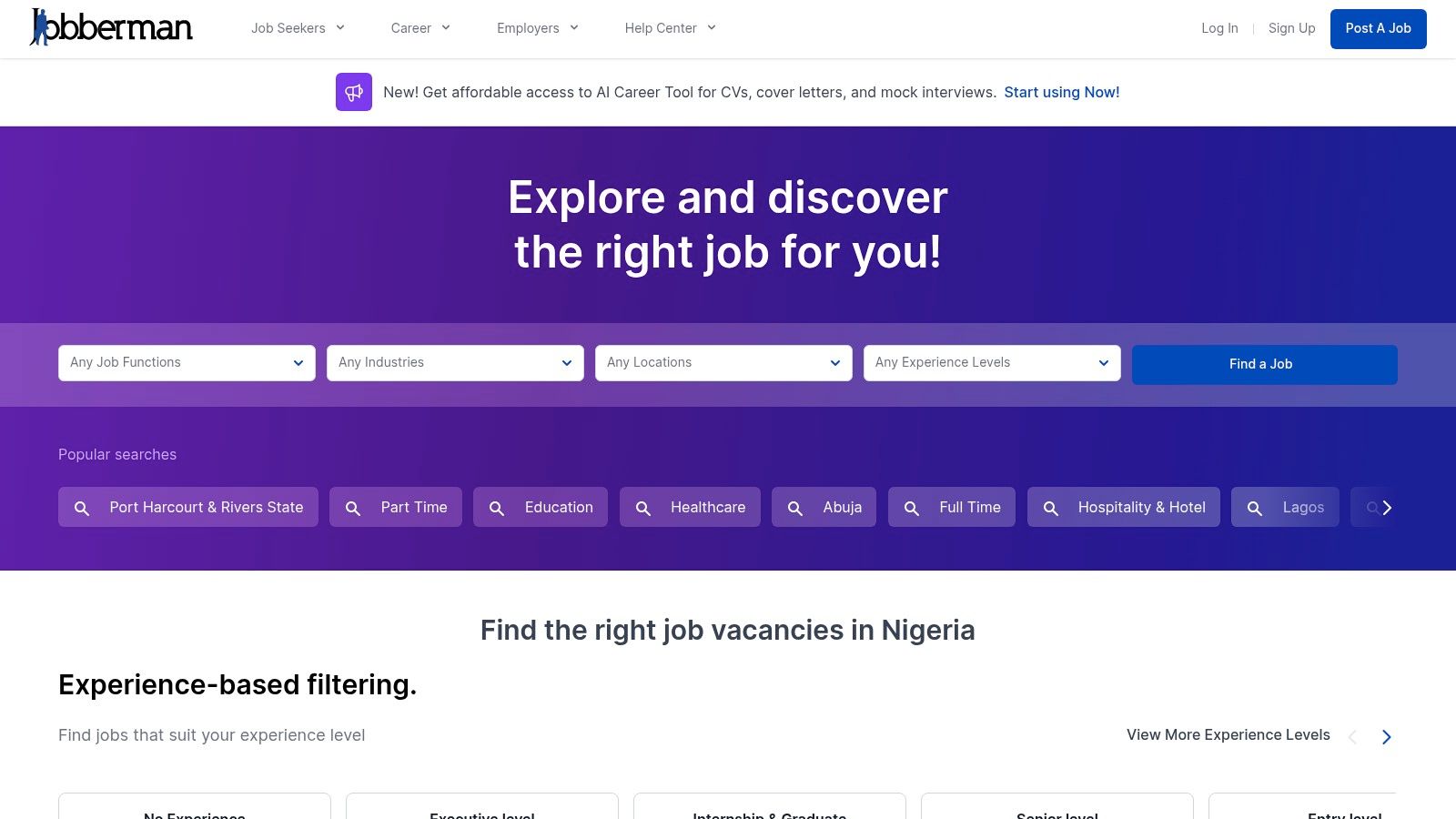
12. Jobberman (Nigeria)
As Nigeria’s leading job board, Jobberman is an essential platform for designers based in the country seeking local and international remote graphic design jobs. Its primary strength lies in its deep focus on the Nigerian market, featuring roles from companies specifically hiring within the region. Many listings offer salary transparency in Nigerian Naira (NGN), providing immediate clarity on compensation which is often missing on global platforms.
User Experience and Features
The platform is free for job seekers and offers straightforward navigation to find work-from-home opportunities. You can filter searches specifically for “remote” roles and set up job alerts to stay updated on new postings. Jobberman also provides career development resources like CV reviews, which can be particularly helpful for refining your application to meet local employer expectations. The mix of full-time and contract roles offers flexibility for different career needs.
Practical Tips for Success
To get the most out of Jobberman, use targeted keywords and be specific. Practical example: Instead of just “remote graphic designer,” search for “remote graphic designer Lagos” or “freelance UI/UX designer Nigeria” to find companies that may have a local preference even for remote roles. Actionable insight: Upload a PDF version of your portfolio directly to your Jobberman profile so recruiters can see your work without having to click an external link. Always vet employers carefully, as the quality of listings can vary.
- Pros: Strong local relevance, salary transparency in NGN, mix of remote full-time and contract roles.
- Cons: Quality and compensation vary; employer legitimacy should be verified.
- Website: Jobberman Remote Graphic Designer Jobs
Top 12 Remote Graphic Design Job Platforms Comparison
| Platform | Core Features & UX ✨ | Unique Selling Points 🏆 | Target Audience 👥 | Value & Pricing 💰 | Quality Rating ★ |
|---|---|---|---|---|---|
| Indeed | Robust filters, resume upload, quick apply | Huge volume, salary transparency | All-level designers, broad sectors | Free to use 💰 | ★★★★☆ |
| Dribbble Jobs | Remote filter, portfolio-forward applications | Design-centric, inbound portfolio interest | Mid-senior designers | Free access 💰 | ★★★★☆ |
| Behance Joblist | Apply via Behance portfolio, filters | Adobe ecosystem integration | Creatives with portfolios | Free access 💰 | ★★★★☆ |
| Upwork | Project catalog, payment protection | Global demand, escrow payments | Freelancers, varied skill levels | Free to join, fees on earnings 💰 | ★★★★☆ |
| Fiverr | Fixed-price gigs, high buyer traffic | Easy startup, transparent delivery | Freelancers & microtask sellers | Free to join, platform fees 💰 | ★★★☆☆ |
| Toptal | Rigorous vetting, curated jobs | Top ~3% talent, strong pay | Experienced senior designers | Free to apply, premium talent 🏆 | ★★★★★ |
| We Work Remotely | Remote-only, region & salary notes | Remote-first employer focus | Remote design job seekers | Mostly free, paid listings possible 💰 | ★★★★☆ |
| Remote OK | Salary/benefits tags, spam warnings | Transparent info, efficient filters | Global remote job hunters | Free to browse 💰 | ★★★☆☆ |
| FlexJobs | Human screening, career resources | Scam reduction, pro development | Serious remote job seekers | Subscription required 💰 | ★★★★☆ |
| Remote.co | Remote-only, compensation bands information | Company spotlights, mixed role types | Remote design job seekers | Free listings 💰 | ★★★★☆ |
| Remote Africa | Africa-centric community, timezone notes | Regional relevance for Nigeria | Nigerian/African remote applicants | Free to browse 💰 | ★★★☆☆ |
| Jobberman (Nigeria) | Local listings, salary visibility in NGN | Strong local relevance, CV reviews | Nigeria-based designers | Free to browse 💰 | ★★★☆☆ |
Supercharge Your Search and Secure Your Next Role
Navigating the landscape of remote work can feel overwhelming, but as we’ve explored, the right platforms can transform your job hunt from a daunting task into a targeted mission. The journey to securing your ideal remote graphic design job is not just about knowing where to look; it’s about strategically positioning yourself for success on each unique platform. From the broad-reaching listings on Indeed and Jobberman to the curated, high-calibre opportunities on Toptal and Dribbble, each site demands a tailored approach.
Your portfolio remains your single most powerful asset. For platforms like Behance and Dribbble, it’s a living, breathing showcase that attracts recruiters directly. On freelance marketplaces such as Upwork and Fiverr, your portfolio pieces become proof of your ability to deliver specific, high-quality results. Practical example: If you’re applying for a UI design role, ensure the first three projects in your portfolio are UI design case studies, not logos or print work. This immediate relevance is crucial for busy recruiters.
From Application to Offer: A Strategic Checklist
To move from searching to signing a contract, you need an organised and proactive strategy. Here is a step-by-step guide to structure your job hunt:
- Platform Selection: Choose 3-4 platforms that best align with your experience. For an experienced UI/UX designer, focus on Toptal and We Work Remotely. For a recent graduate in Nigeria, start with Jobberman and Remote Africa.
- Profile Optimisation: On each chosen platform, treat your profile as a dedicated landing page. Use keywords relevant to your niche (e.g., “UI/UX designer,” “branding specialist,” “motion graphics artist”) and ensure your headline clearly communicates your value.
- Portfolio Customisation: Create a master portfolio with all your best work. For each application, create a custom, 3-5 project PDF or link that specifically addresses the job description’s requirements.
- Application Tracking: Use a simple spreadsheet or a tool like Trello. Create columns for “Company,” “Role,” “Platform,” “Date Applied,” and “Status” (e.g., Applied, Interviewing, Rejected). This prevents confusion and helps you track follow-ups.
Beyond the Job Board: Building Your Career
Remember that a full-time remote role isn’t the only path to a successful design career. The skills you cultivate can be channelled into entrepreneurial ventures that offer greater flexibility and creative control. For instance, many graphic designers supplement their income or build a full-time business by creating and selling their own digital products. If this path interests you, you can explore how to make money on Etsy with your designs, turning your creative assets into a consistent revenue stream.
Ultimately, landing a rewarding remote graphic design job is a blend of talent, persistence, and smart strategy. The platforms we’ve covered are the gateways, but your ability to present your skills, communicate your value, and consistently apply with intention will make all the difference. Embrace the process, learn from each application, and stay confident in your creative abilities. Your next great opportunity is waiting.
Ready to make your portfolio and application materials stand out? RichlyAI can help you generate compelling project descriptions, craft unique cover letters, and even brainstorm creative concepts to add to your showcase. Use our AI-powered tools to refine your professional brand and accelerate your search for the perfect remote graphic design job. Start creating with RichlyAI today!

I ran into an issue following these steps, any suggestions?
Clear, concise, and straight to the point. Great job!
Τhis post is invaluable. Where can Ι find out more?
Feel free to visit my web page … digital banking