
This guide is written for L&D teams, HR leaders, and enterprise training managers comparing platforms for workforce upskilling, compliance, onboarding, and internal mobility. The list focuses on enterprise fit, rollout tradeoffs, and operating discipline rather than vendor hype.
Selection Criteria
To evaluate the best AI learning platforms for enterprise use, we focused on six practical criteria: content depth, AI-assisted personalization, analytics, integration fit, governance, and rollout complexity. That matters because most organizations are not buying a course library alone. They are buying part of a larger learning operation that needs to connect with HR systems, reporting, compliance processes, and the broader AI and the future of work agenda.
We also looked at whether each platform is better suited for broad upskilling, compliance-driven learning, collaborative knowledge transfer, or long-term skills intelligence. For enterprise buyers, that framing is more useful than a generic “best tools” roundup.
Comparison Snapshot
The strongest platforms in this category tend to fall into four groups: content-first libraries, learning experience platforms with stronger skills and pathway logic, operational LMS platforms with heavier administration and compliance support, and AI-native challengers that emphasize search and personalization. Teams already working through AI safety and risk questions should evaluate those vendor claims with the same discipline they use for other enterprise AI systems.
1) Coursera for Business
Coursera for Business remains a strong option for organizations that want broad course coverage, recognizable academic and industry partners, and a relatively straightforward path to enterprise scale. Its value is breadth and familiarity rather than a deeply customized AI-native learning workflow.
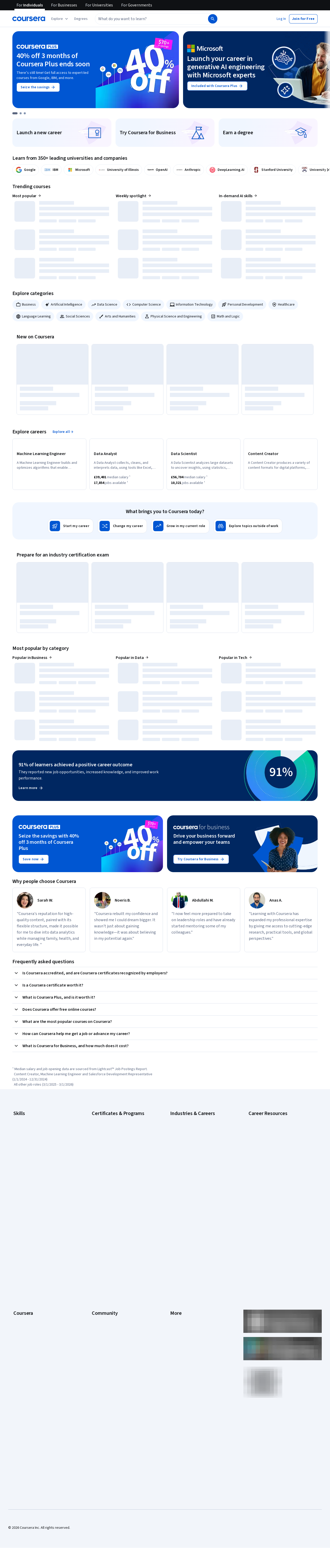
Best fit: enterprises that need broad upskilling coverage across technical, business, and leadership skills.
Tradeoffs: personalization and workflow control can feel lighter than what some skills platforms and LXPs offer.
2) Go1
Go1 is often attractive for teams that want broad content aggregation with a marketplace-style model and flexible access to learning resources across providers. It can fit organizations that want fast catalog expansion without building content sourcing from scratch.

Best fit: organizations that want breadth of learning content and flexible curation across multiple providers.
Tradeoffs: strong internal governance is still needed to keep catalog quality and learner pathways coherent.
3) LinkedIn Learning
LinkedIn Learning is a practical choice when teams want business-friendly content, manager visibility, and low-friction employee adoption. It also fits organizations already working within the Microsoft ecosystem.

Best fit: enterprises that prioritize adoption, business-oriented learning, and familiar user experience.
Tradeoffs: it may not be the strongest fit for highly specialized regulated training programs.
4) Degreed
Degreed is better viewed as a skills and learning experience platform than a simple course provider. Its enterprise value comes from skills architecture, content aggregation, and the ability to align learning with workforce planning and internal mobility.

Best fit: organizations building a long-term skills strategy tied to talent development and internal mobility.
Tradeoffs: rollout typically needs stronger operating discipline than a plug-and-play content platform.
5) Docebo
Docebo is frequently considered by companies that need a more configurable learning platform with AI-assisted recommendations, automation, and customer or partner training options. It can support broader training operations beyond internal employee learning alone.

Best fit: enterprises that want flexibility across employee, customer, and partner training programs.
Tradeoffs: implementation scope can expand quickly if governance and ownership are not clearly defined.
6) 360Learning
360Learning stands out for collaborative learning workflows and peer-driven knowledge sharing. That makes it useful when organizations want subject-matter experts to contribute more directly to training instead of relying only on centrally produced content.

Best fit: companies that want to combine structured learning with team-driven knowledge transfer.
Tradeoffs: collaborative models require stronger content review and publishing discipline.
7) Sana Learn
Sana Learn is often discussed as one of the more AI-forward entrants in enterprise learning. It is positioned around search, knowledge access, and personalized learning workflows rather than just a static course library.
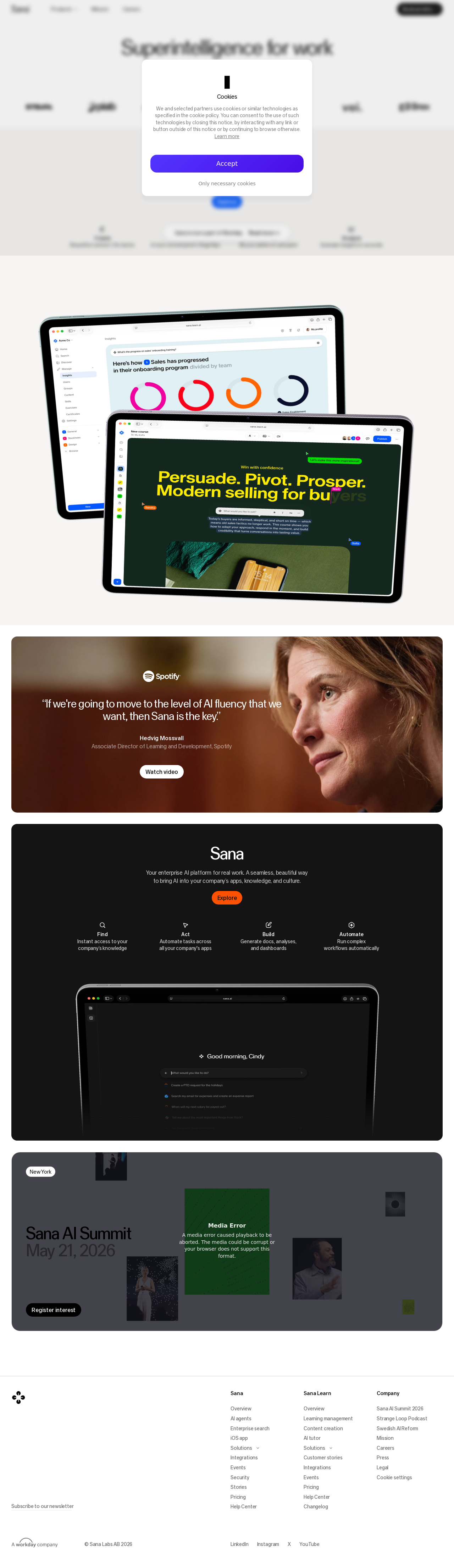
Best fit: teams that want a more AI-native learning experience and stronger knowledge discovery.
Tradeoffs: buyers should examine governance, privacy, and integration depth carefully before large-scale rollout.
8) LearnUpon
LearnUpon is a practical option for organizations that want a cleaner operational training environment with support for multiple learner groups and simpler administration. It is often easier to operationalize than heavier enterprise suites.
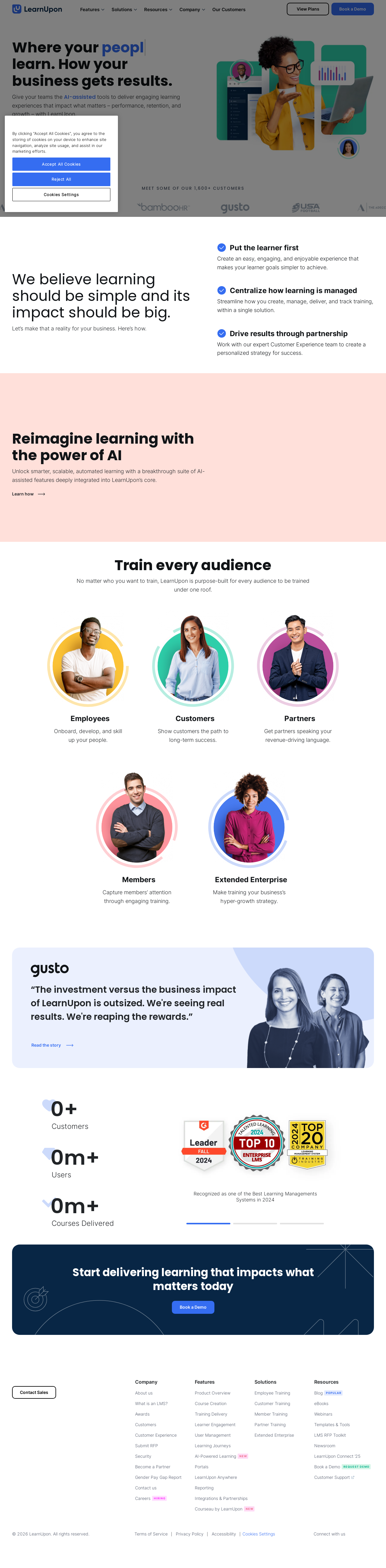
Best fit: mid-market and enterprise teams that want manageable administration and faster time to value.
Tradeoffs: advanced AI capabilities may be less central than on more AI-native challengers.
9) Absorb LMS
Absorb LMS is typically evaluated by organizations that need enterprise-grade administration, reporting, and structured training management. It can fit well where operational reliability matters as much as innovation.

Best fit: enterprises with large learner populations and formal training operations.
Tradeoffs: buyers should assess how much AI value is native versus layered onto traditional LMS workflows.
10) Cornerstone Learning
Cornerstone Learning remains a serious option for larger organizations with complex HR ecosystems, skills strategies, and compliance-heavy training needs. Its strength is enterprise depth rather than simplicity.

Best fit: large enterprises that need learning tied closely to talent management and workforce planning.
Tradeoffs: it can be more complex to implement and govern than lighter-weight alternatives.
Risks and Tradeoffs
The biggest enterprise mistake is assuming an AI learning platform succeeds on content alone. In practice, failure usually comes from weak rollout design, poor integration planning, unclear governance ownership, or unrealistic assumptions about adoption. That is especially relevant for organizations already dealing with broader AI governance and global policy questions across business systems.
Teams should also avoid over-reading vendor claims around personalization, efficiency, or skills intelligence. Those capabilities may be useful, but they still depend on clean data, active administration, and a realistic learning strategy. The same caution applies to other categories of AI tools for content creation and workflow automation: the platform matters, but the operating model matters more.
Next Steps for L&D Teams
A good next move is to shortlist three platforms based on business fit rather than market noise. Then run a focused pilot tied to one real use case: onboarding, compliance training, manager enablement, or technical upskilling. Success criteria should include adoption, learner feedback, admin effort, integration quality, and reporting usefulness.
That pilot should also answer practical governance questions: who approves content, who manages permissions, how learner data is handled, and which metrics actually matter. Teams following wider AI trends for 2026 should treat learning platforms as part of enterprise operating design, not as isolated software purchases.
FAQs
What is the best AI learning platform for enterprise teams?
There is no single best platform for every organization. The strongest choice depends on whether you need broad content access, skills intelligence, compliance support, collaborative learning, or tighter integration with HR and talent systems.
Should teams prioritize AI features over content quality?
No. AI-assisted recommendations and search can be valuable, but platform fit, governance, content quality, and rollout readiness matter just as much.
How should enterprises compare vendors fairly?
Use one shared scorecard across content coverage, admin effort, reporting, integrations, governance controls, and learner adoption rather than relying on vendor marketing language alone.
Key Takeaways
- The best AI learning platforms for 2026 differ in enterprise fit, not just feature lists.
- Teams should evaluate governance, integration, and rollout effort alongside AI capabilities.
- Content-first libraries, LXP-style platforms, and enterprise LMS suites solve different problems.
- A tool shortlist should be validated through a real pilot, not only a vendor demo.
- Learning outcomes improve when platform selection is tied to operating model clarity and measurable business goals.
Conclusion
The best AI learning platforms in 2026 are the ones that fit how your organization actually trains, measures skills, and governs learning operations. For enterprise teams, the decision should be grounded in business fit, system readiness, and rollout practicality rather than abstract AI claims.
If your team evaluates platforms through that lens, you are more likely to choose a system that improves learning outcomes without creating unnecessary operational drag.
