
Tired of searching for a legit online business that pays and finding only dead ends? The internet is filled with opportunities, but navigating them to find genuine, profitable ventures can be a challenge. Many guides offer vague advice, leaving you more confused than when you started. This article cuts through the noise. We have compiled a practical list of proven platforms and business models that real people in Nigeria are using to build sustainable income streams.
This is not just another list of ideas. For each option, we provide a clear breakdown: what it is, its earning potential, and the concrete steps you need to take to get started. You’ll find direct links to each platform, screenshots to guide you, and actionable tips to help you succeed. Whether you’re a freelancer looking to monetize your skills, a creator ready to sell digital products, or an entrepreneur eager to enter e-commerce, this guide is designed to give you a clear path forward. For those specifically focused on selling physical products, our ultimate guide to starting an e-commerce company offers a more in-depth walkthrough. Let’s explore the real business opportunities waiting for you.
1. Upwork
Upwork is a global freelance marketplace connecting professionals with clients. For Nigerians looking to start a legit online business that pays, it offers a structured platform to sell professional skills like web development, content writing, graphic design, and virtual assistance.
Upwork’s key feature is its payment protection system. An escrow service holds funds for fixed-price projects until milestones are approved, and a Work Diary verifies hours for hourly contracts, ensuring freelancers are compensated. Withdrawal options include direct-to-local-bank transfers in Naira and Payoneer, simplifying payments for Nigerian freelancers.
How to Get Started on Upwork: A Step-by-Step Guide
- Create a Professional Profile: Sign up and build a compelling profile. Treat it like a professional CV and portfolio. Practical Example: Instead of saying “Experienced Writer,” write “Content Writer specializing in B2B SaaS blog posts with 5+ years of experience helping brands like [mention a past client type] increase organic traffic.”
- Verify Your Identity: Complete the identity verification process to build trust with potential clients. This is mandatory.
- Find Relevant Jobs: Use the advanced search filters to find projects that match your expertise. Filter by budget, client history, and required skills.
- Write Winning Proposals: Craft customized proposals for each job. Address the client’s specific needs mentioned in their job post. Actionable Tip: Start your proposal by directly addressing their problem: “I see you need a landing page copy that converts. In my last project, I wrote a copy for a similar fintech app that resulted in a 15% increase in sign-ups.”
Actionable Takeaways
- Specialize your profile in a profitable niche (e.g., “WordPress developer for e-commerce sites”).
- Send 3-5 highly customized proposals daily instead of 20 generic ones.
- Get your first few 5-star reviews by over-delivering on small, quick projects.
Tools & Resources
- Website: https://www.upwork.com/
- Portfolio Builder: Canva or Behance for creating a visual portfolio.
- Payment: Payoneer for receiving international payments.
2. Fiverr
Fiverr is a global online marketplace where freelancers offer services, known as “gigs,” starting from $5. For anyone seeking a legit online business that pays with a low barrier to entry, Fiverr is an excellent starting point, especially for creative services like graphic design, voice-overs, and content writing.
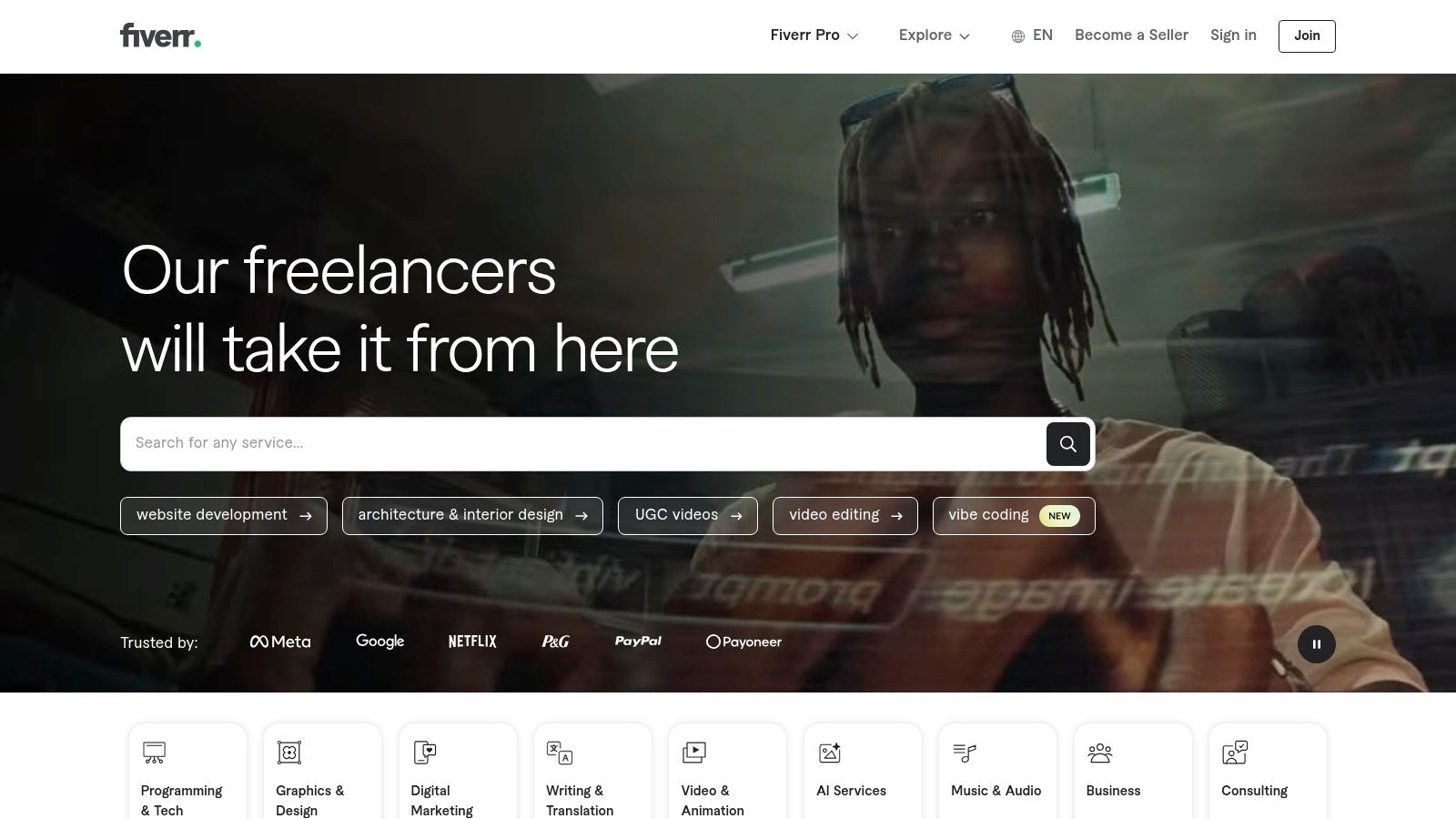
Fiverr’s model is “service-as-a-product.” Instead of bidding on projects, you package your service into a clearly defined offering that clients purchase directly. This simplifies the sales process. Fiverr offers reliable payout methods like Payoneer and PayPal, ensuring you can access your earnings securely. The platform’s order management system makes handling clients straightforward, even on a mobile device, making it one of the best money-making apps for freelancers.
How to Get Started on Fiverr: A Step-by-Step Guide
- Create Your Seller Profile: Sign up for free and build a profile that showcases your expertise. Add a professional photo and a clear, concise description.
- Create Your First Gig: Design your first service package. Be specific. Practical Example: Instead of a generic “I will design a logo,” create a gig titled “I will design a modern minimalist logo for your tech startup.”
- Set Up Tiered Pricing: Offer three packages (Basic, Standard, Premium). For the logo design example, this could be: Basic (1 logo concept), Standard (3 concepts + source file), Premium (3 concepts + source file + social media kit).
- Promote Your Gig: Share your gig on social media and professional networks. Actionable Tip: Your first few orders are critical for getting reviews. Consider offering a discount to your network to get initial traction.
Actionable Takeaways
- Optimize your gig title and description with keywords buyers are searching for (e.g., “SEO article,” “YouTube thumbnail”).
- Use a high-quality video in your gig gallery to increase conversions by over 200%.
- Respond to inquiries within an hour to maintain a high response rate, which improves your ranking.
Tools & Resources
- Website: https://www.fiverr.com/
- Gig Image Creator: Canva for creating professional-looking gig images and videos.
- Further Reading: Best Money-Making Apps for Freelancers
3. Jumia Seller Center (Nigeria)
Jumia is Nigeria’s largest e-commerce platform. Its Seller Center is a direct gateway for entrepreneurs to sell physical products to a massive audience without building a website from scratch. It is a prime choice for a legit online business that pays through e-commerce.
Jumia’s power lies in its established logistics and payment ecosystem. The platform handles payment processing and offers its own delivery service (Jumia Express), which simplifies order fulfillment. This builds buyer trust and allows sellers to focus on sourcing products. Payouts are made weekly to your bank account after successful deliveries.
How to Get Started on Jumia: A Step-by-Step Guide
- Register as a Seller: Sign up on the Jumia Seller Center website with your business details, ID, and bank account information.
- Complete Onboarding Training: Jumia requires new sellers to complete a short training on how to list products and manage orders.
- List Your Products: Create product listings with clear titles, high-quality images, and detailed descriptions. Practical Example: For a power bank, list the brand, capacity (e.g., 20,000mAh), number of ports, compatibility (iPhone/Android), and dimensions. Use multiple photos showing different angles.
- Manage Orders and Inventory: When an order comes in, use the dashboard to process it. Package the item and drop it off at a Jumia hub. Actionable Tip: Keep your inventory levels updated in real-time to avoid selling out-of-stock items, which can lead to penalties.
Actionable Takeaways
- Source products with a good profit margin after accounting for Jumia’s commissions and fees.
- Use high-quality, original images of your products to stand out from other sellers.
- Participate in Jumia’s promotional campaigns (like Black Friday) to boost visibility and sales.
Tools & Resources
- Website: https://sellercenter.jumia.com.ng/
- Further Reading: Affiliate marketing platforms in Nigeria (for an alternative sales model).
4. Flutterwave Store
Flutterwave Store enables entrepreneurs to launch an online shop quickly and for free. For Nigerians seeking a legit online business that pays, this platform offers one of the fastest ways to start selling physical and digital products to a global audience, removing the technical barriers of building a site from scratch.
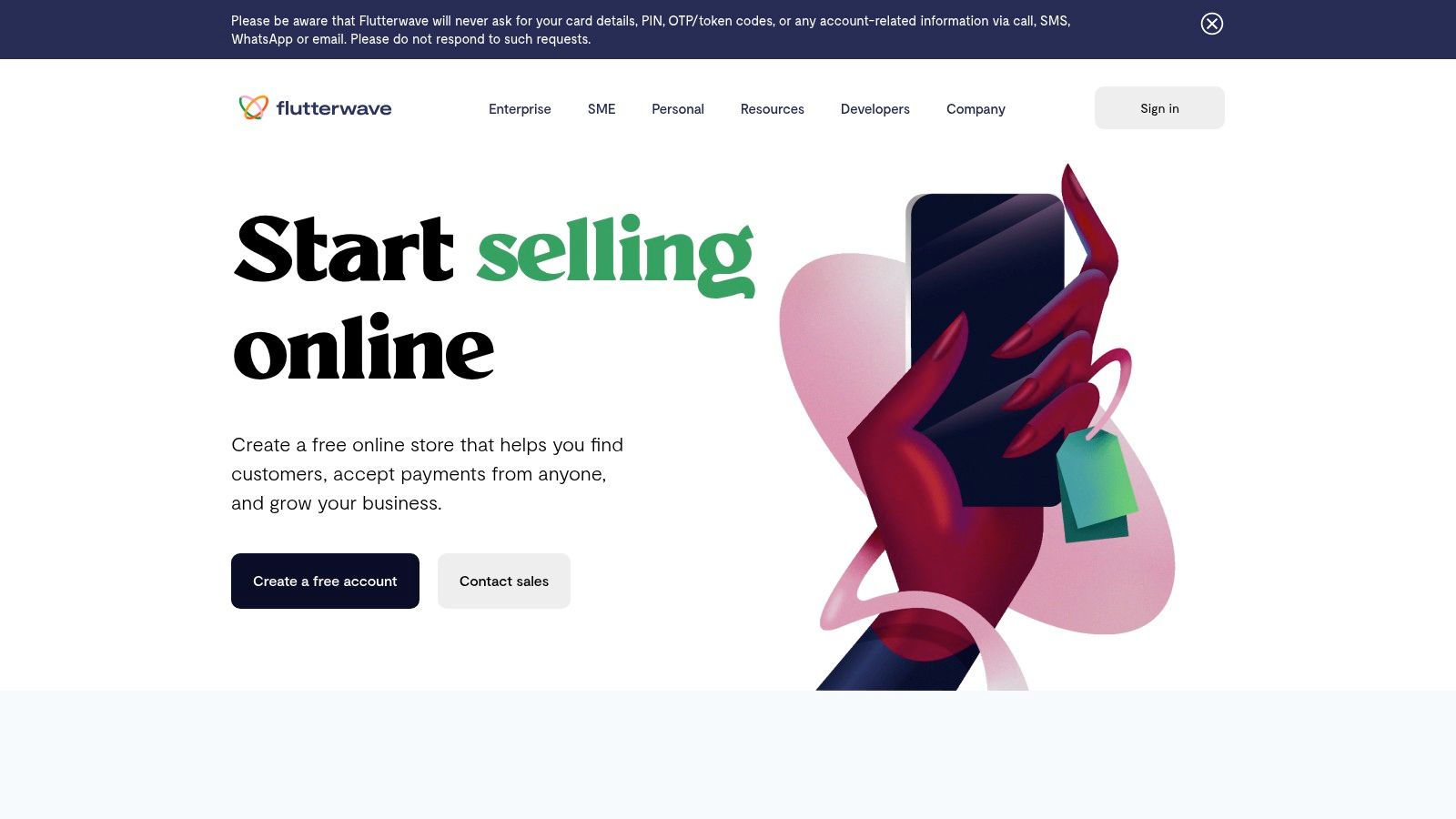
Flutterwave Store’s strength is its integrated, multi-channel payment system. Customers can pay via card, bank transfer, or USSD, which reduces cart abandonment. It also offers integrated shipping options, allowing you to manage order fulfillment directly from your dashboard. This all-in-one approach simplifies the entire sales process.
How to Get Started on Flutterwave Store: A Step-by-Step Guide
- Create a Flutterwave Account: Sign up for a free Flutterwave for Business account.
- Activate Your Store: In your dashboard, navigate to the “Store” tab and set up your storefront with a name, description, and logo.
- Add Your Products: Upload images and details. Set prices in Naira. Practical Example: If you sell handmade beaded necklaces, upload clear photos of each design. In the description, specify materials used, length, and clasp type.
- Configure Payments and Shipping: Link your bank account for payouts and choose your preferred shipping rates or partners.
- Share Your Store Link: Promote your unique store link on social media (like Instagram Bio), WhatsApp status, and email signatures.
Actionable Takeaways
- Use your Flutterwave Store link as your primary “website” on your social media profiles.
- Create product bundles or special offers (e.g., “Buy 2, Get 1 Free”) to increase average order value.
- Use WhatsApp or Instagram DMs for customer service and direct potential buyers to your store link to complete their purchase securely.
Tools & Resources
- Website: https://flutterwave.com/ng/store/
- Further Reading: How to start an online business
5. Selar
Selar is an e-commerce platform built for African creators to sell digital products like ebooks, online courses, and memberships. For those in Nigeria looking to monetize their knowledge, Selar provides a streamlined way to run a legit online business that pays without technical hurdles.
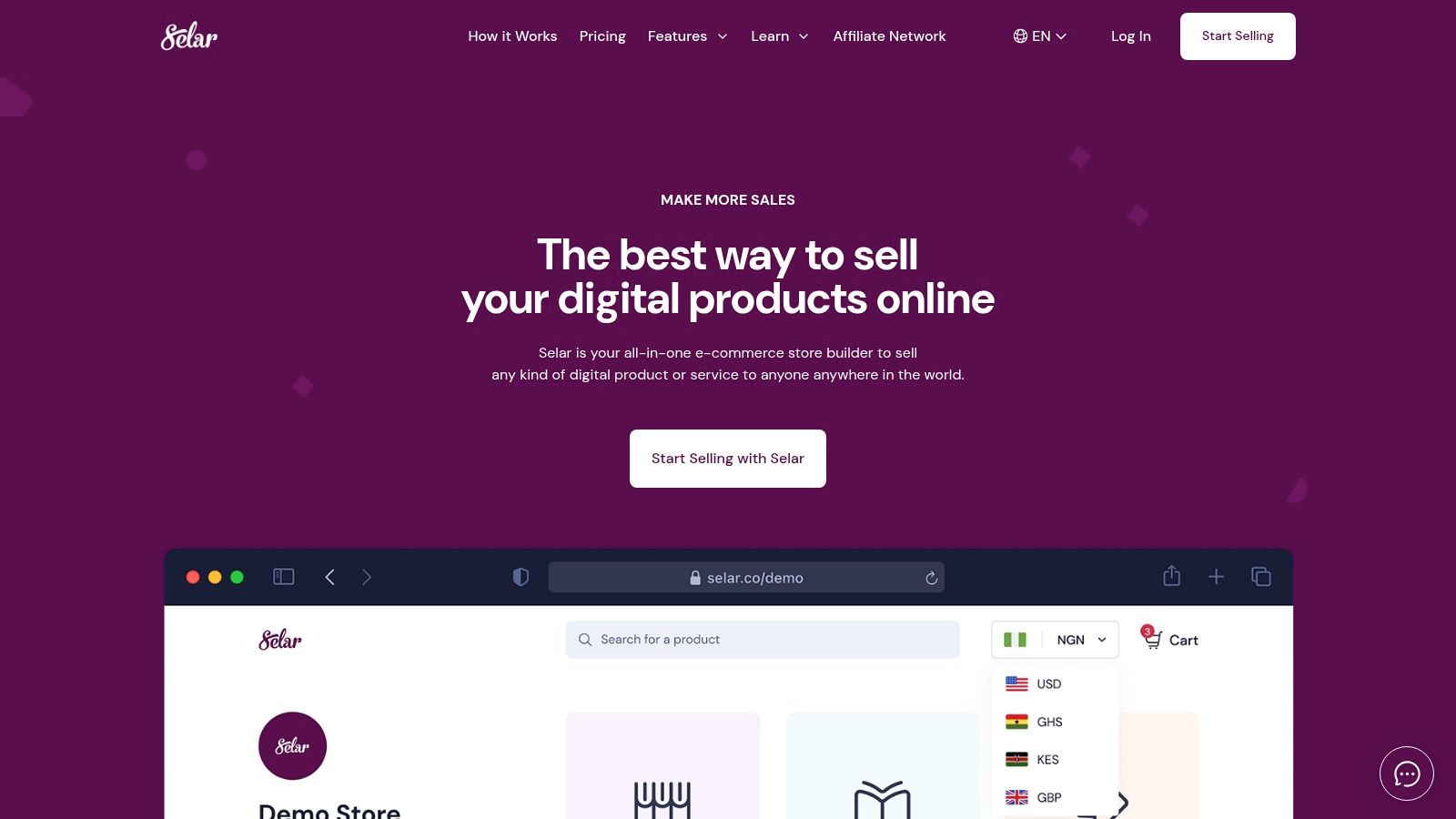
Selar’s focus is the African market. It supports multiple currencies (Naira, Cedis) and integrates with local payment gateways like Flutterwave and Paystack for seamless transactions. Features like a built-in affiliate marketing system, automated email marketing, and fast 24-hour payouts to Nigerian bank accounts empower creators to scale efficiently.
How to Get Started on Selar: A Step-by-Step Guide
- Sign Up for Free: Create an account on the Selar website. The free plan is robust enough to start selling.
- Set Up Your Bank Details: Add your Nigerian bank account information to receive payouts.
- Upload Your Product: Click “Add Product.” Choose the product type (e.g., digital product, course). Fill in the details, set your price, and upload your files. Practical Example: To sell a PDF ebook on “A Beginner’s Guide to Nigerian Stock Investing,” you would upload the PDF file, design a simple cover image using Canva, write a compelling description of what readers will learn, and set your price (e.g., ₦5,000).
- Promote Your Store Link: Selar generates a unique link for your product. Share this across your social media channels, email list, and website to drive sales.
Actionable Takeaways
- Create a high-value “lead magnet” (a free digital product) to build an email list, then upsell your paid products to that list.
- Use Selar’s built-in affiliate feature to allow others to sell your product for a commission, expanding your reach.
- Price your digital products based on the value and transformation they provide, not just the length.
Tools & Resources
- Website: https://selar.co/
- Ebook Creator: Canva or Google Docs for creating and formatting your ebook.
- Further Reading: Best business ideas in Nigeria
6. Amazon Kindle Direct Publishing (KDP)
Amazon Kindle Direct Publishing (KDP) is a self-publishing platform for ebooks and paperbacks. For a legit online business that pays through passive income, KDP offers a path to earning royalties from book sales on the world’s largest retail site with no upfront inventory costs.
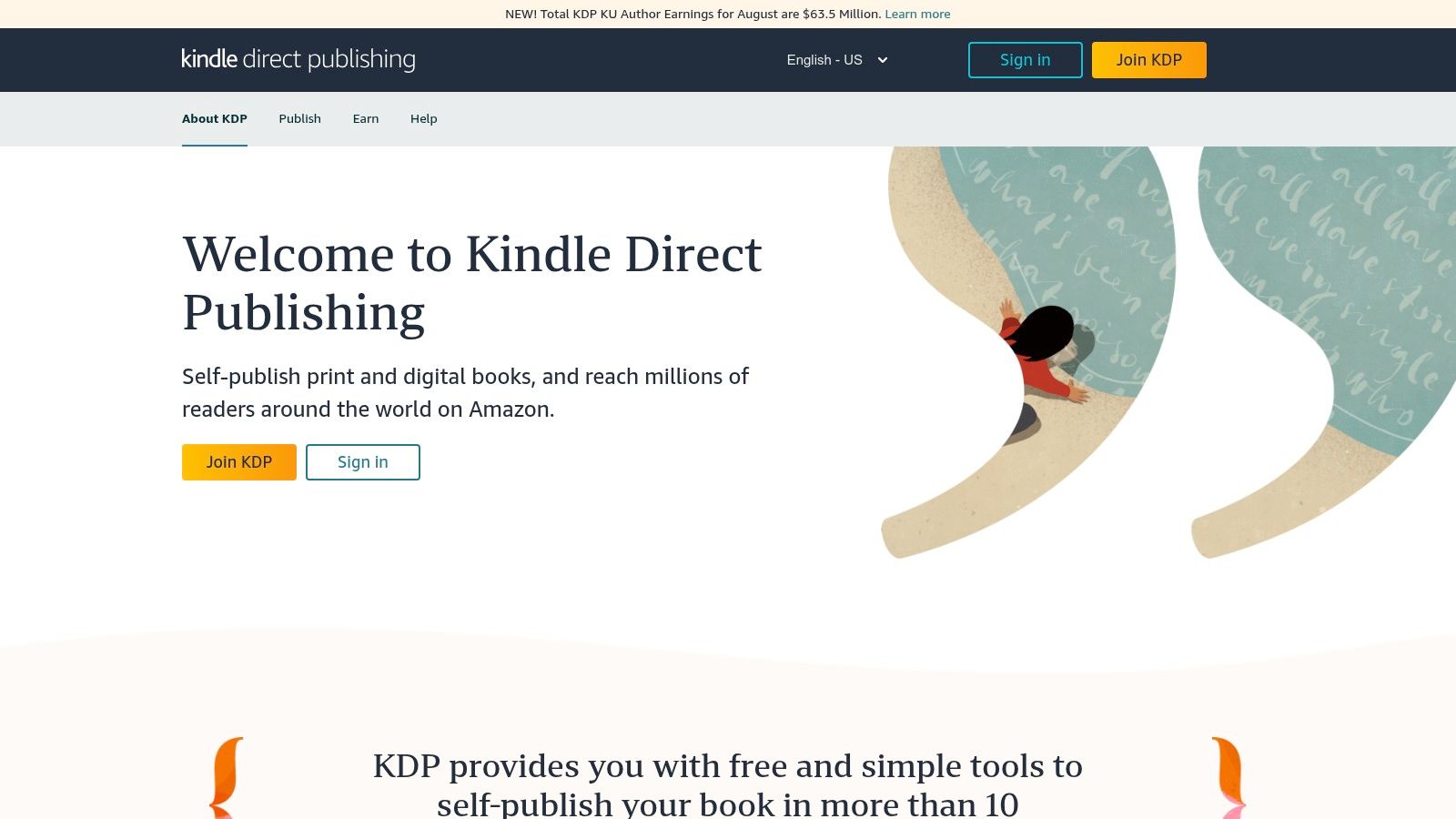
KDP’s key features are its print-on-demand service and global reach. You can publish novels, non-fiction guides, or even low-content books like journals. Amazon handles printing, shipping, and customer service. For Nigerian authors, payments can be received through Payoneer, which provides a US bank account for direct royalty deposits.
How to Get Started on KDP: A Step-by-Step Guide
- Create a KDP Account: Sign up for free using your Amazon account and complete your tax and payment information.
- Prepare Your Manuscript: Write and format your book. Practical Example: A 15,000-word non-fiction ebook on “Side Hustles for Nigerian Students” can be written in Google Docs, saved as a Word document, and then uploaded directly to KDP.
- Upload and Publish: Follow the steps to upload your files, write a compelling book description, choose relevant keywords (e.g., “making money online Nigeria,” “student side hustle”), and set your price.
- Market Your Book: Once live, your main task is promotion. Actionable Tip: Run an Amazon Free Book Promotion for the first 5 days to get initial downloads and reviews, which can boost your book’s ranking.
Actionable Takeaways
- Research profitable, low-competition niches using Amazon’s search bar and bestseller lists before writing.
- Invest in a professional-looking cover design, as it’s the most important marketing tool for your book.
- Publish a series of related books to build a loyal readership and increase your author earnings.
Tools & Resources
- Website: https://kdp.amazon.com/
- Cover Design: Canva or hire a designer on Fiverr.
- Further Reading: 5 secret methods to sell more books on Amazon
7. Udemy
Udemy is a massive online learning and teaching marketplace. For those seeking a legit online business that pays, Udemy serves two purposes: you can learn in-demand skills (like coding or digital marketing) to start a service business, or you can create and sell your own courses to generate passive income.
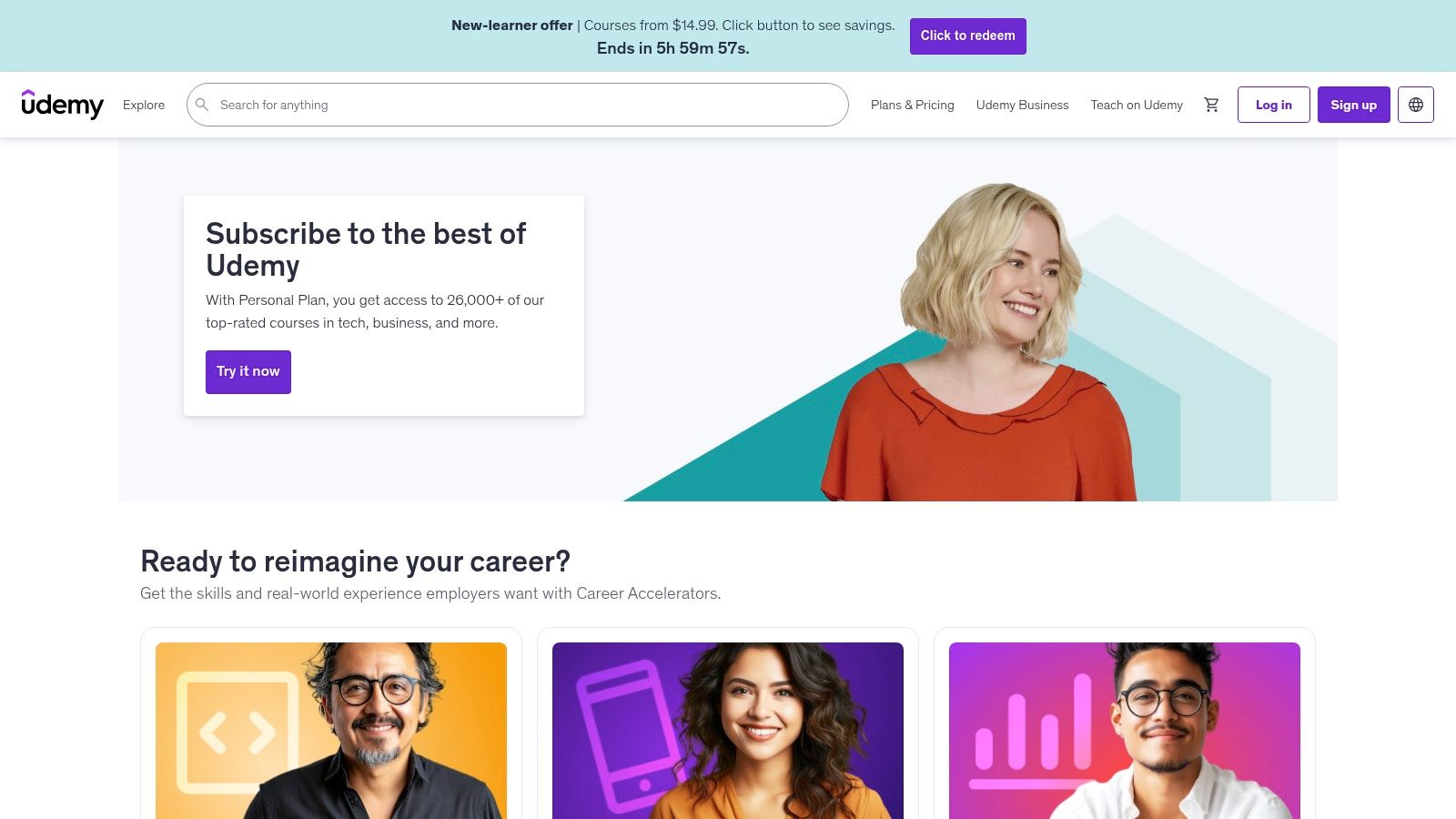
Udemy is accessible due to localized pricing (often in Naira) and a 30-day money-back guarantee. For instructors, it provides all the tools needed to build, market, and sell a course to a massive built-in audience. The Udemy app also functions as one of the top money-making apps available in Nigeria by allowing you to manage your courses and earnings on the go.
How to Get Started on Udemy: A Step-by-Step Guide
- Define Your Goal: Decide if you are there to learn a skill or to create and sell a course.
- For Learners: Find top-rated courses in your chosen field. Look for instructors with strong reviews and comprehensive curriculums.
- For Instructors: Sign up as an instructor. Plan your curriculum, record your videos, and prepare supplementary materials. Practical Example: To create a course on “Introduction to Canva for Small Business Owners,” plan 10-15 short (3-7 minute) video lessons. Use screen recording software like Loom to show a step-by-step process for designing a social media post, a business card, and a simple presentation.
- Launch and Promote: Set a price and publish your course. Use your social media channels to promote your course with a custom coupon code.
Actionable Takeaways
- Create a course on a topic where you have proven results or unique expertise.
- Make your first few lectures available for free preview to entice students to enroll.
- Engage with your students in the Q&A section to build a community and encourage positive reviews.
Tools & Resources
- Website: https://www.udemy.com/
- Screen Recorder: Loom or OBS Studio for recording your course videos.
- Further Reading: Top money-making apps available in Nigeria
Legit Online Business Platforms Comparison
| Platform | Implementation Complexity 🔄 | Resource Requirements ⚡ | Expected Outcomes 📊 | Ideal Use Cases 💡 | Key Advantages ⭐ |
|---|---|---|---|---|---|
| Upwork | Medium – profile setup and bidding | Moderate – skill and portfolio | Steady freelance income, project diversity | Professional freelancing across industries | Strong payment protection, global clients |
| Fiverr | Low – quick gig setup | Low – basic service listing | Fast sales on common digital services | Quick gigs, fast onboarding | Easy start, reliable global payouts |
| Jumia Seller Center | Medium – product listing & logistics | High – inventory & shipping | Sales of physical goods locally in Nigeria | Local e-commerce for physical products | Large local demand, clear payout structure |
| Flutterwave Store | Low – free setup, user-friendly | Low – product sourcing | Fast launch, local sales with integrated shipping | SMEs selling physical & digital products | Fast launch, multiple payment methods |
| Selar | Low-Medium – digital product setup | Low – digital content creation | Fast payouts, digital product sales in Africa | African digital creators & businesses | Tailored for Africa, fast NGN payouts |
| Amazon KDP | Medium – content creation & publishing | Moderate – writing, marketing | Royalty income from ebooks/paperbacks | Authors and self-publishers globally | Scalable royalties, global distribution |
| Udemy | Low – course creation or purchase | Low-Moderate – learning or teaching | Skill acquisition or selling courses | Learning/teaching business/technical skills | Affordable learning, localized pricing |
Your Next Steps to a Profitable Online Business
The journey from idea to income is now more accessible than ever. We have explored a diverse range of options, each offering a unique pathway to building a legit online business that pays. From freelancing on Upwork and Fiverr to reaching local customers with Jumia and Selar, the opportunities are abundant. For creators, platforms like Amazon KDP and Udemy provide the infrastructure to monetize your knowledge globally.
The common thread connecting all these successful ventures is action. The digital landscape can seem overwhelming, but the most crucial step is the first one. Your ideal business is not a distant dream; it’s a series of practical, manageable steps waiting to be taken.
Actionable Takeaways — Your Immediate Next Steps
- Pick ONE Platform Today: Don’t get paralyzed by choice. Based on your skills (service, physical product, or digital product), sign up for one platform from the list above. Create a basic profile or store. It doesn’t need to be perfect.
- Define Your First Offer: Be specific. What is the first thing you will sell? Examples: “A 500-word blog post on personal finance,” “A set of 3 handmade bracelets,” or “A 10-page PDF guide on meal prepping.”
- Research the Top 3 Sellers in Your Niche: On your chosen platform, find three successful people doing what you want to do. Analyze their profiles, product descriptions, or gig packages. Note their pricing and how they present their value. Use this for inspiration.
Building a legit online business that pays is a marathon, not a sprint. It demands consistency, a willingness to learn, and the courage to start. The tools we have discussed remove many traditional barriers. The only remaining variable is your commitment to taking that first, decisive step.
Are you ready to accelerate your content creation and marketing efforts for your new online business? RichlyAI provides powerful AI tools specifically designed to help you write compelling product descriptions, engaging social media posts, and effective marketing copy in minutes. Start building your profitable online venture faster by visiting RichlyAI today.
