
Video editing has become one of Nigeria’s most sought-after creative careers, offering a solid path to both artistic expression and financial security. The surge in video editor jobs isn’t just a coincidence; it’s fuelled by a massive appetite for digital content across nearly every industry, from filmmaking to marketing.
Why Video Editor Jobs Are Booming in Nigeria
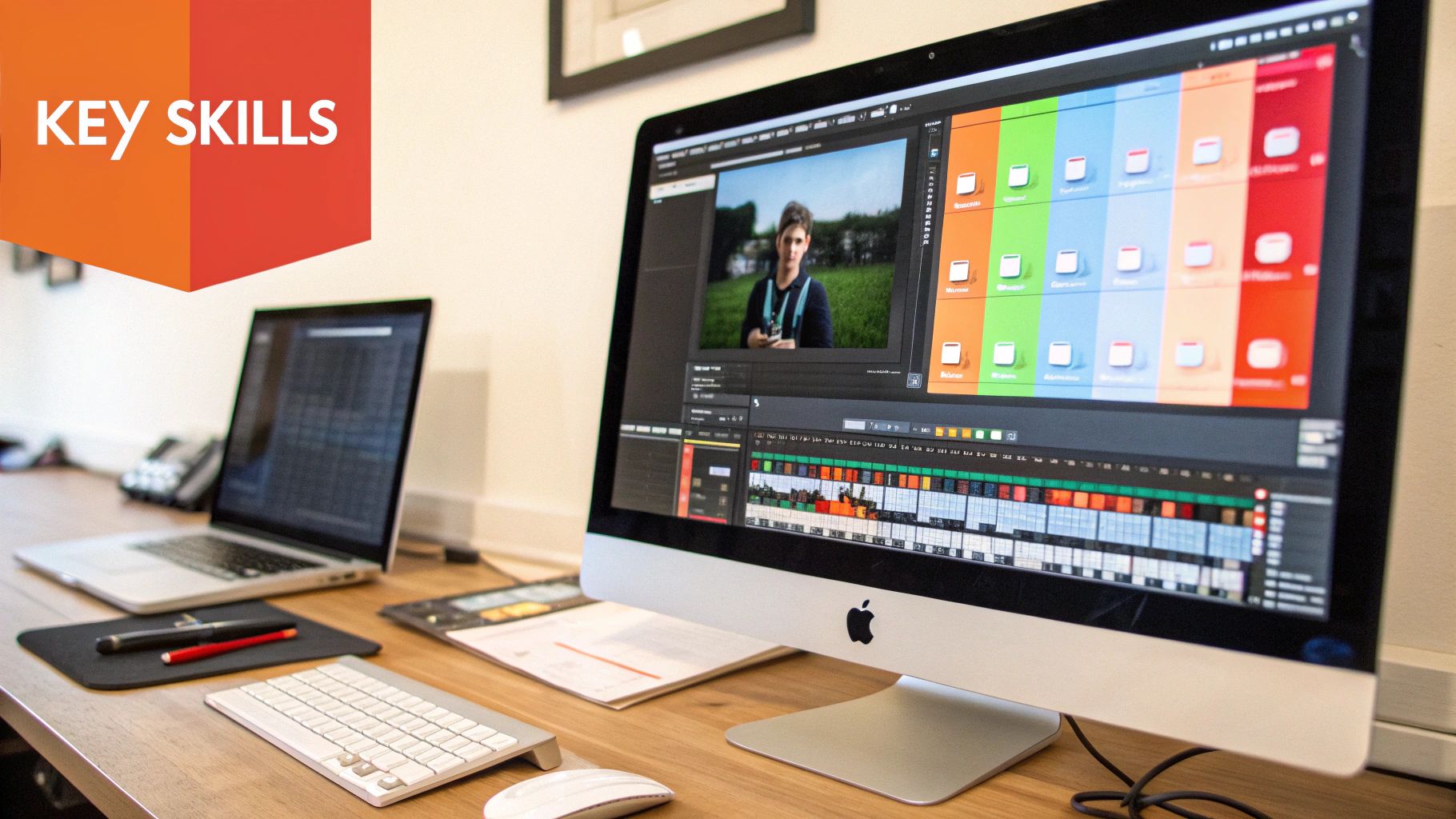
So, what does a video editor actually do? Think of them as the ultimate storyteller of our time. They are the skilled hands that take raw, unorganised footage—whether it’s for a Nollywood blockbuster, a hilarious YouTube skit, or a slick corporate advert—and weave it into a polished and compelling story. In a world that speaks the language of video, their work is absolutely essential.
This role goes far beyond simply cutting and pasting clips together. On any given day, an editor makes crucial creative choices about the rhythm of the story, the impact of sound, the mood set by the colour, and the overall narrative flow. For example, if editing a wedding video, you’d use slow dissolves and romantic music to evoke emotion. For an action scene, you’d use fast, jarring cuts and intense sound effects to build suspense. The real aim is to stir a specific emotion or communicate a crystal-clear message, making their skillset invaluable.
The Forces Fuelling the Demand
A few powerful factors are behind the incredible growth in demand for video editors across Nigeria. This isn’t just a fleeting trend; it’s a deep-seated change in how businesses, entertainers, and even organisations talk to their audiences.
The main drivers are:
- The Nollywood Effect: As one of the world’s largest film industries by sheer volume, Nollywood produces thousands of movies every year. Each and every one of those films needs a team of editors for post-production, creating a constant and huge need for talented professionals.
- The Social Media Explosion: Platforms like Instagram, TikTok, and YouTube are built on video. To stay relevant, brands, influencers, and content creators must churn out a steady flow of high-quality videos, which opens up endless opportunities for both freelance and full-time editors. For example, a brand like Jumia needs editors for its Instagram Reel ads, while a comedian like Broda Shaggi needs editors for his YouTube skits.
- The Rise of Digital Advertising: With marketing budgets moving online, video ads have become a top priority. Video editors are the ones who create those attention-grabbing adverts that are so critical for driving sales and building brand awareness.
The demand for video editors is especially high in major cities. With Nigeria’s young and tech-savvy population favouring video content, opportunities are everywhere. A quick search shows over 39 video editor job openings currently listed in Lagos alone, proving it’s a hot market for anyone with the right skills.
This shift to a digital-first economy means that almost every sector now relies on video. Whether it’s for corporate training, event highlights, music videos, or online courses, the need is vast and varied. This broad demand ensures a stable and growing job market for years to come. You can explore how Nigeria is embracing this digital transformation by reading about its vision for inclusive innovation and global leadership.
To give you a clearer picture, here’s a quick overview of what to expect.
The Nigerian Video Editor Role at a Glance
| Aspect | Summary |
|---|---|
| Primary Role | Transform raw footage into a finished, compelling video product. |
| Key Industries | Film (Nollywood), Marketing & Advertising, Social Media, Music. |
| Average Salary (Entry-Level) | ₦80,000 – ₦150,000 per month. |
| Average Salary (Experienced) | ₦250,000 – ₦500,000+ per month. |
| Job Outlook | Excellent, with strong and sustained growth. |
| Top Locations | Lagos, Abuja, and other major commercial hubs. |
This table highlights the fantastic potential and stability that a career in video editing offers in Nigeria today.
Mastering the Essential Skills and Software
Becoming a sought-after video editor is about more than just knowing your way around complex software. It’s a blend of technical skill and a finely tuned creative sense. Think of it like this: anyone can learn to use a chef’s knife, but a true chef understands how to combine ingredients to create a masterpiece. That’s the level you need to aim for.
To get there, you first have to get comfortable with the industry’s standard equipment. Getting to know the best video editing tools is non-negotiable. Recruiters and clients will expect you to be proficient in at least one of the major platforms right out of the gate.
Building Your Technical Toolkit
Your journey starts with mastering the software—the digital workbench where raw footage is shaped into a compelling story. Don’t feel you need to learn them all at once. Pick one, get really good at it, and then branch out.
- Adobe Premiere Pro: This is a powerhouse and the go-to for a huge range of projects, from big-budget commercials to snappy social media videos. Its seamless connection with other Adobe tools like After Effects is a massive plus.
- DaVinci Resolve: Originally famed for its phenomenal colour grading, Resolve has grown into a complete, all-in-one editing suite. It has a strong following in Nollywood and professional filmmaking, especially since its free version is incredibly powerful.
- Final Cut Pro: Exclusive to Apple users, this software is loved by YouTubers and indie creators for its intuitive design and fast performance. If you’re a Mac user, it’s a fantastic option to consider.
Actionable Insight: Don’t just dabble in every program. Become an expert in one. For example, commit to a 30-day challenge where you create a short, 1-minute video every day using only Premiere Pro. This forces you to learn shortcuts, experiment with effects, and master the workflow, which is far more impressive to an employer than a superficial understanding of many tools.
Beyond the Software: The Creative Edge
Technical proficiency will get you an interview, but it’s your creative vision that will secure the job and build your reputation. Employers aren’t just looking for someone to click buttons; they want a storyteller who can see the potential in raw footage and bring it to life.
This is where the real art lies. It’s about understanding rhythm and pacing, knowing when to let a shot breathe, and when to make a quick cut for impact. Practical example: To build your creative eye, take a scene from a movie you love. Mute the sound and try to re-edit it using only the visuals to tell the story. This exercise forces you to focus on pacing and shot selection. These are the instincts that separate a good editor from a truly great one.
As you sharpen these core skills, it’s also smart to look toward the future. Technologies like AI are already starting to handle some of the more tedious editing tasks, freeing up editors to concentrate more on the creative side of things. You can find out more by understanding generative AI empowering creativity in Nigeria. Keeping up with these changes will make sure your skills stay valuable for years to come.
Breaking into Nollywood and the Media Industry

If you’re looking for video editor jobs in Nigeria, Nollywood is probably your ultimate ambition. It’s the powerhouse of our nation’s creative economy and a huge employer of post-production talent. But getting your foot in the door isn’t like applying for a corporate job; it requires a deep understanding of its unique structure and the specific skills it prizes.
Unlike a typical 9-to-5, success in Nollywood often comes down to your network and your reputation. Production houses and media companies are always searching for dependable, skilled editors who can deliver brilliant work under tight deadlines and immense pressure.
Understanding The Nollywood Structure
Before you can find your place, you need to know the different roles available. Think of a film’s post-production team as a busy kitchen crew, where every person has a specific task that contributes to the final masterpiece.
- Assistant Editor: This is the most common starting point. You’ll be sorting and organising raw footage (logging), syncing audio, and prepping projects for the lead editor. It’s a fantastic opportunity to learn the entire workflow from the inside out.
- Lead Editor: This is the head chef. You’re the one steering the creative vision of the final cut, collaborating closely with the director to sculpt the story, control the pacing, and land the emotional punches.
- Post-Production Lead/Supervisor: This senior role is like the restaurant manager, overseeing the entire post-production process—from editing and sound design to colour grading and visual effects. It demands sharp project management skills.
The Nigerian film industry, famously known as Nollywood, is a global giant. It’s the second-largest film producer in the world by sheer volume, churning out over 2,500 films every year. This means there’s a constant demand for editors. But the competition is intense—some job platforms report that only a tiny 2% of applicants even make it to the interview shortlist. You can find more details about the competitive video editor job market on MyJobMag.
Actionable Steps for Networking
In this industry, your connections are your most valuable asset. Building solid relationships with directors, producers, and fellow crew members is non-negotiable. Here’s a step-by-step guide to start networking effectively:
- Attend Industry Events: Make a plan to attend events like the Africa International Film Festival (AFRIFF) or local screenings. Actionable Step: Don’t just collect contacts. Set a goal to have three meaningful conversations. Ask people what they’re working on and what challenges they face. Follow up the next day with a simple email referencing your conversation.
- Offer to Help on Small Projects: Connect with independent filmmakers or final-year university students. Actionable Step: Find a student director on Instagram and send them a direct message like, “Hi, I’m a budding editor looking to build my portfolio. I love your visual style. If you ever need a hand with editing a short project, I’d be happy to help out to gain experience.”
- Use Social Media Smartly: Follow Nigerian directors like Kemi Adetiba and production companies like Inkblot Productions on Instagram and LinkedIn. Actionable Step: Don’t just “like” their posts. Leave thoughtful comments. For instance, if they post a trailer, comment on a specific editing choice you admired, e.g., “The quick cuts during the chase scene were brilliant, really built the tension!” This shows you have a professional eye.
Nollywood cherishes editors who truly get the unique rhythm of Nigerian storytelling—the dialogue, the drama, the cultural subtleties. Proving you understand this is just as critical as your technical skills. And as the industry continues to grow, it’s also smart to keep an eye on new technologies. Getting a clear sense of what AI means for creators in Nigeria can help you stay ahead of the curve.
Thriving as a Remote and Freelance Video Editor
Let’s be clear: the best video editor jobs aren’t always found within a traditional office. The explosion of remote work has blown the doors wide open, creating a global marketplace where Nigerian editors can link up with international clients, put their talent on a world stage, and earn in foreign currencies. This isn’t just a trend; it’s a massive opportunity to build a truly international career right from your home.
To make this work, you have to be smart about how you position yourself on global freelance platforms. Think of marketplaces like Upwork and Fiverr as your digital storefronts, buzzing with clients who need your skills. The secret is to craft a profile that doesn’t just blend in but truly stands out. This means showcasing a killer portfolio and actively gathering those glowing reviews that build trust with people who’ve never met you.
Of course, anyone freelancing in Nigeria knows the unique challenges we face, especially with unpredictable power and internet. Top-tier remote editors don’t just hope for the best; they plan for the worst.
- Power Solutions: A reliable inverter system or a generator isn’t a luxury; it’s a non-negotiable tool to ensure you never miss a deadline because of a power cut.
- Internet Backup: Always have a plan B. A mobile hotspot with a different network provider (e.g., MTN and Glo) can be a lifesaver when your main connection decides to take a break.
See these not as costs, but as essential investments in your professional reputation and reliability.
Setting Your Rates and Getting Paid
One of the most exciting parts of working remotely is the potential to earn significantly more. But pricing your services is a delicate dance. You need to be competitive enough to land the job, but not so cheap that you undervalue your craft.
Getting your pricing right is fundamental to being paid what you’re worth. To get a better handle on structuring your fees, it’s worth exploring different pricing models by checking out these insights on freelance video editing rates.
When it’s time to get paid, services like Payoneer or Wise are your best friends. They make it incredibly straightforward to receive payments in dollars or euros and get the funds into your local bank account without the usual headaches. The more you build a brand known for consistent, high-quality work, the more you can command higher rates and attract premium clients.
As you rack up more projects and experience, your earning potential grows, a trend that holds true in the remote world.
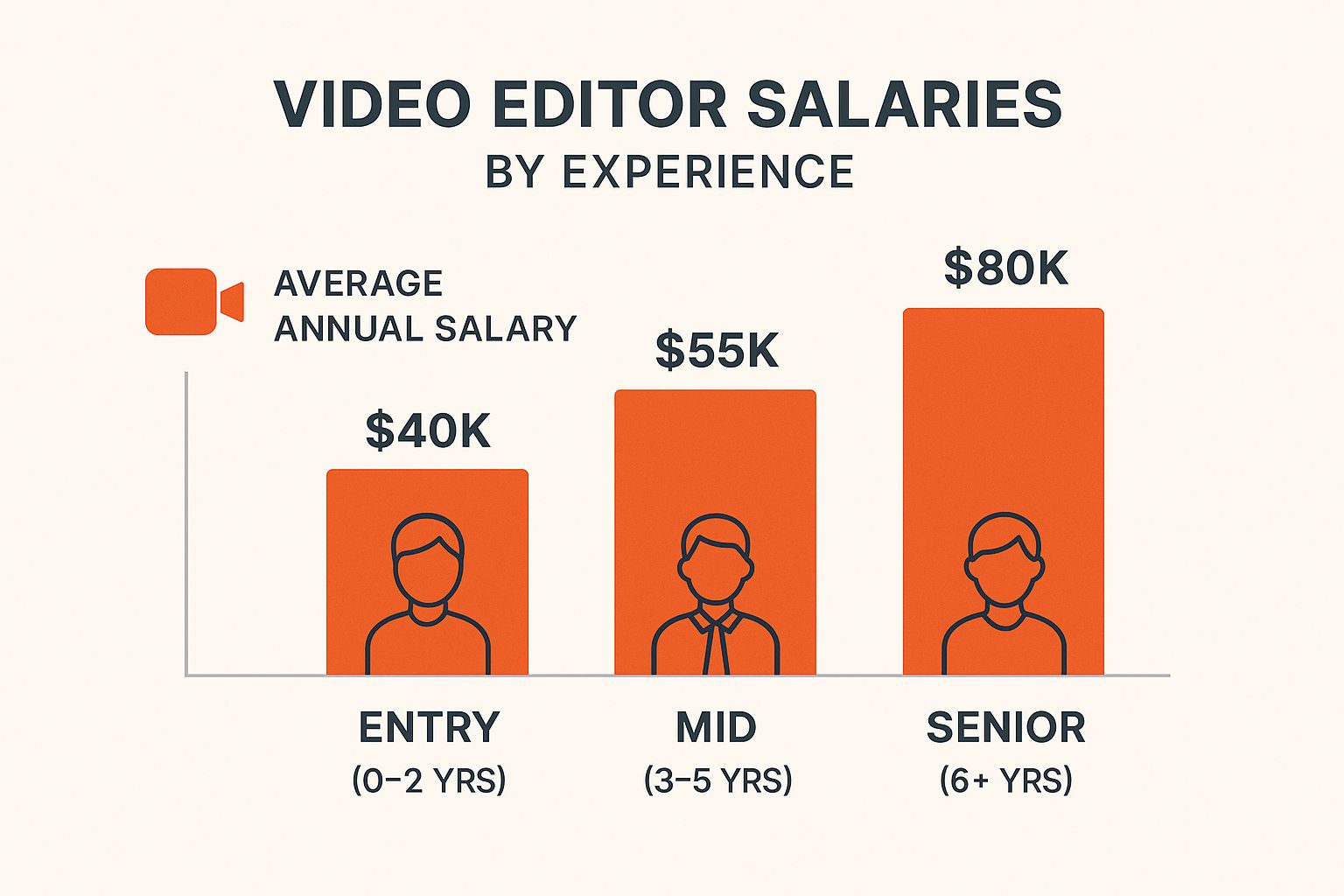
This data paints a clear picture: income grows with experience. Senior editors earn substantially more as they build their expertise and a powerful portfolio.
Local In-House vs Global Remote Video Editor Jobs
Choosing between a local in-house role and a global remote one is a major career decision. Each path offers different benefits and challenges, from salary potential to work-life balance. Here’s a breakdown to help you compare the two.
| Feature | Local In-House Role | Global Remote Role |
|---|---|---|
| Salary Potential | Paid in Naira, often with fixed salary ranges. | Paid in foreign currency (USD, EUR), with higher earning potential. |
| Client Base | Primarily Nigerian companies and clients. | Access to international clients and diverse global projects. |
| Work Environment | Office-based, structured hours, direct team collaboration. | Home-based, flexible hours, requires self-discipline. |
| Infrastructure | Company provides equipment, power, and internet. | You are responsible for your own equipment, power, and internet. |
| Career Growth | Can lead to senior/management roles within one company. | Growth through building a brand, portfolio, and client network. |
Ultimately, the right choice depends on your personal career goals and work style. While a local job offers stability, a remote career provides unparalleled flexibility and earning power if you’re willing to manage the logistics.
The demand for skilled editors on the global stage is stronger than ever. Remote video editor jobs have become a major source of employment in Nigeria, allowing professionals to work with international companies without leaving the country. For these roles, salaries can range anywhere from $24,000 to $60,000 annually, depending on your experience and the scale of the client.
As you build your freelance career, always be thinking about what’s next. Specialising in a high-demand niche or even branching out into related fields can open up incredible new opportunities. For those looking ahead, our guide on How to Transition into an AI Ethics Consultant Role: Skills and Strategies might offer some fascinating insights into future-proofing your career.
How to Grow Your Career and Increase Your Earnings
Landing your first video editing job is a huge accomplishment, but it’s really just the beginning. To build a career with real staying power and a healthy income, you need to think strategically about your next steps. I like to think of a career like a video project: your first role is the raw footage. Now, it’s time to shape it into something special.
This means moving beyond just being a “general” editor. Sure, most editors can string clips together, but the ones earning the big money have mastered high-value skills. Specialisation is what separates the everyday editor from the in-demand expert.
Develop High-Value Specialisations
If you want to earn more, you need to develop skills that are both high-demand and less common. These are the abilities that solve tricky, expensive problems for clients and production companies, making you someone they can’t afford to lose.
Think about mastering one or more of these lucrative areas:
- Motion Graphics: Getting good with tools like Adobe After Effects to create slick animated titles, lower thirds, and other dynamic visuals can add a significant amount to your project fees.
- Colour Grading: Becoming a master of colour in a program like DaVinci Resolve gives you the power to control the entire mood of a film. This is a non-negotiable skill for high-end productions, especially in advertising and Nollywood.
- Documentary Editing: This is a special kind of storytelling. It takes a unique talent to sift through hours of unscripted footage and pull out a powerful, coherent narrative.
- Visual Effects (VFX): Even basic VFX skills can make you a complete package for smaller productions. You’ll save them the headache and cost of hiring a separate VFX artist, making you a much more attractive hire.
Actionable Insight: Don’t just learn a skill; apply it. For example, after learning the basics of colour grading in DaVinci Resolve, download free raw footage from Blackmagic’s website. Create a one-minute “before and after” reel showing how you transformed a flat, lifeless shot into a cinematic, moody scene. Add this to your portfolio. This practical proof is what justifies higher pay.
Negotiate Your Worth and Stay Ahead
Once you’ve put in the work to build these specialised skills, you need the confidence to ask for what you’re worth. Don’t go into a salary negotiation blind. Do your homework and find out what editors with your specific skillset and experience are earning in the Nigerian market.
Here’s a step-by-step approach to negotiation:
- Research: Use sites like Glassdoor and talk to peers to find a realistic salary range for a “Video Editor with Motion Graphics skills in Lagos.”
- Prepare Your Case: Create a document listing your recent accomplishments with measurable results. For example: “Increased client’s YouTube watch time by 30% by adding engaging motion graphics.”
- Present with Confidence: During the negotiation, present your portfolio and your accomplishment list. Say, “Based on my research and the specific value I bring with my colour grading expertise, I’m seeking a salary in the range of X to Y.”
Explaining the tangible value you bring demonstrates professionalism and justifies the higher fee you’re asking for.
The video industry is always evolving, especially with new technology popping up. Keeping an eye on tools that can automate the boring, repetitive parts of the job frees you up to focus on what really matters: the creative work. To get a better handle on this, it’s worth learning how to future-proof your career in the age of AI and automation. By embracing change and always adding to your toolkit, you can build a video editing career that’s not just successful, but genuinely profitable for the long haul.
Where to Find and How to Apply for Video Editor Jobs
So, you’ve honed your craft and you’re ready to get paid for it. Fantastic. Now comes the next big step: actually finding the best video editor jobs. Knowing where to look and how to present yourself is just as crucial as your ability to cut a killer sequence. A smart strategy is what gets your application out of the slush pile and into the hands of a hiring manager.
Your job search should be a mix of local hunting and casting a wider net. For opportunities right here in Nigeria, make it a habit to check top job boards like MyJobMag and Jobberman. You’ll find plenty of openings from local media houses, ad agencies, and companies needing in-house creative talent.
But don’t stop there. Global platforms are your ticket to remote work and international opportunities. LinkedIn is an absolute powerhouse for this. It’s not just a job board; it’s a networking hub. A sharp, well-optimised profile will have recruiters finding you, not just the other way around.
Crafting a Winning Application
In the creative world, a boring, generic CV is a fast track to the bin. Your application needs to scream talent and professionalism from the very first glance.
Your portfolio is your most powerful tool. It’s not just a collection of work; it’s a visual testament to your skill. Make the link to your showreel or portfolio website impossible to miss—place it right at the top of your CV, below your name and contact details.
Once you’ve found roles that get you excited, it’s time to make your application shine. A great starting point is to learn how to improve your resume with language that speaks directly to creative hiring managers.
Follow this step-by-step guide to build an application that demands attention:
- Tailor Your CV for Every Single Role: Forget listing dull duties. Focus on achievements. Instead of saying “Edited videos,” try “Edited a 5-part social media campaign for Brand X that boosted viewer engagement by 40% and led to a 15% increase in link clicks.” Be specific and use data.
- Write a Cover Letter With Personality: Ditch the stiff “To Whom It May Concern.” Address the hiring manager by name if possible. Practical Example: “Dear [Hiring Manager Name], I’ve been following [Company Name]’s work for a while, and the editing on the recent [Project Name] ad was fantastic. My own experience in creating fast-paced, high-energy commercial edits, as seen in my reel [link], aligns perfectly with your style.”
- Showcase Your Most Relevant Work First: Don’t make a recruiter hunt for the right content. If you’re applying for a job editing corporate videos, make sure the first thing they see in your portfolio is your best corporate work. If it’s a music video gig, lead with that. This shows you’ve read the job description and understand their specific needs.
Your Questions About Video Editing Careers, Answered
If you’re thinking about jumping into a video editing career, you’ve probably got a ton of questions. Let’s get straight to the point and tackle some of the most common ones I hear from aspiring editors here in Nigeria.
Do I Really Need a University Degree?
Honestly? No. While a degree in film or media studies looks nice on paper, it’s not a must-have to land a video editor job. In this field, proof is in the pudding.
What truly matters to any producer or creative director is your practical skill and your showreel. A killer portfolio that shows you can tell a compelling story and handle the technical side will always speak louder than a certificate.
Which Software Should I Learn First?
My advice is to pick one industry-standard program and master it, rather than trying to learn a little bit of everything. For most editors starting out in Nigeria, your best bets are Adobe Premiere Pro or DaVinci Resolve.
Both are powerhouses in Nollywood, advertising, and the booming online content scene. Getting good at either one makes you instantly more marketable.
Actionable Step: To get experience without a job, find a local event (like a wedding or a small concert) and record it on your phone. Then, edit a 2-minute highlight video. This creates a real-world project for your portfolio. You can even offer it to the event organisers for free. This is the fastest way to build your showreel and demonstrate your ability to deliver a finished product. That’s what gets you your first paid gig.
What’s a Typical Entry-Level Salary?
For a full-time, junior video editor in a major city like Lagos or Abuja, you can generally expect to start somewhere between ₦80,000 and ₦150,000 a month.
Of course, this is just a starting point. As you rack up more experience, build a more impressive portfolio, and maybe even specialise in sought-after skills like motion graphics or colour grading, that number can climb pretty quickly.
Ready to create stunning content without the steep learning curve? With RichlyAI, you can generate compelling video scripts, marketing copy, and visuals in seconds. Streamline your creative workflow and focus on what you do best—telling great stories. Start for free on RichlyAI.
