
When you think of Nigeria, what comes to mind? For many, it’s the bustling energy of Lagos, the vibrant rhythms of Afrobeats, or its powerhouse status in Africa. While all true, this nation of over 220 million people holds countless stories and achievements that often fly under the radar. From a film industry that rivals Hollywood to a tech scene dubbed ‘Silicon Lagoon,’ Nigeria is a country of staggering diversity, innovation, and influence that continually shapes global culture and commerce.
This article moves beyond the headlines to share amazing facts about Nigeria that reveal its true depth and global significance. Forget surface-level trivia; we will explore actionable insights and practical examples that showcase why this West African nation is not just a regional leader but a global force to watch. We will cover its economic might, linguistic diversity, and the sheer scale of its creative and technological output.
Get ready to have your perceptions challenged and your curiosity sparked by details you may not have known. Whether you are a researcher, entrepreneur, or simply a curious mind, this curated list will provide a fresh perspective on the complexities and triumphs of the Giant of Africa. The facts presented here are not just interesting tidbits; they are windows into the trends, opportunities, and cultural currents emanating from one of the world’s most dynamic countries.
1. Nigeria is Africa’s Most Populous Country and Economic Powerhouse
One of the most amazing facts about Nigeria is its sheer scale, both in population and economic might. With a population exceeding 223 million people, it stands as the most populous nation in Africa and the sixth largest in the world. This demographic weight makes Nigeria a critical player on the global stage, influencing everything from culture to commerce. This massive population is not just a number; it represents a dynamic and youthful workforce that is driving significant economic activity. Nigeria holds the title of Africa’s largest economy, boasting a Gross Domestic Product (GDP) of over $440 billion. This economic strength is diversified across several key sectors, including oil and gas, agriculture, telecommunications, and a rapidly expanding tech scene often referred to as ‘Yabacon Valley’. The country is also home to Africa’s richest person, Aliko Dangote, a testament to the immense entrepreneurial spirit present.
This bar chart visualises Nigeria’s key demographic and economic indicators, highlighting its substantial population, GDP, and growth rate.
alt text: Infographic bar chart showing Nigeria’s key metrics: Population at 223 million, GDP at $440 billion, and a growth rate of 2.6%.
What You Can Do With This Information
The data clearly illustrates Nigeria’s position as a continental giant. This combination of human capital and economic output creates a fertile ground for innovation and investment.
Practical Example: A global e-commerce brand can use this demographic data to justify market entry. They can analyze the youth population’s spending habits and target them with mobile-first advertising campaigns for fashion and electronics, capitalizing on the massive, untapped consumer base. Learn more about the best business ideas in Nigeria that leverage this powerful economic landscape.
2. Nollywood is the World’s Second-Largest Film Industry
Another of the most amazing facts about Nigeria is its massive influence on global cinema. The Nigerian film industry, popularly known as Nollywood, is a cultural and economic phenomenon. It produces an astonishing volume of films, estimated at over 2,500 annually. This prolific output makes Nollywood the second-largest film industry in the world by the number of movies produced, surpassing Hollywood in the United States and second only to India’s Bollywood.

alt text: A movie clapperboard with “Nollywood” written on it, symbolizing the Nigerian film industry, with a Nigerian flag and film reels in the background.
The industry’s modern era is often traced back to the 1992 direct-to-video film Living in Bondage. Today, Nollywood has evolved significantly, with higher production values and global distribution deals. Blockbuster films like The Wedding Party have broken box-office records, while streaming giants like Netflix now heavily invest in original Nigerian content. This cinematic powerhouse is driven by iconic actors and visionary directors who have become continental stars. Nollywood’s storytelling often focuses on authentic Nigerian experiences, making it a powerful vehicle for cultural expression and a significant contributor to the national economy.
What You Can Do With This Information
For content creators and marketers, Nollywood’s success provides a blueprint for creating culturally resonant content that scales.
Practical Example: A marketing team can create a video ad campaign that mimics Nollywood’s storytelling style—using relatable family drama and local humour—to promote a household product. This approach feels more authentic and engaging to the local audience than a generic, Western-style commercial.
3. Nigeria Has Over 500 Indigenous Languages
One of the most incredible and amazing facts about Nigeria is its profound linguistic diversity. The country is home to over 500 distinct indigenous languages, making it one of the most linguistically varied places on the planet. This rich tapestry reflects the immense cultural mosaic of its people. While English serves as the official language, the heart of Nigeria’s cultural identity beats in its native tongues. The three major languages are Hausa (North), Yoruba (Southwest), and Igbo (Southeast). Beyond these, hundreds of other languages like Fulfude, Kanuri, Ijaw, and Tiv are spoken by millions.
This linguistic wealth fosters a deep sense of local identity and cultural pride but also necessitates multilingual strategies in media and public life. For instance, major news outlets like the BBC have dedicated services in Hausa, Igbo, Yoruba, and Pidgin to reach diverse audiences. Understanding this diversity is key to appreciating the true depth of Nigerian culture.
What You Can Do With This Information
This linguistic landscape is a critical factor for anyone aiming to communicate effectively in Nigeria. A one-size-fits-all approach will fail.
Practical Example: A mobile app developer launching a health information service in Nigeria can significantly increase adoption by offering the user interface in not just English, but also in Yoruba, Hausa, Igbo, and Nigerian Pidgin. This localization shows cultural respect and makes the app accessible to a much broader audience, including those in rural areas.
4. Lagos is a Megacity Built Partially on Water
One of the most amazing facts about Nigeria is the unique geography of its commercial nerve centre, Lagos. This sprawling megacity, home to over 15 million people, is a vibrant metropolis built on a complex network of islands, sandbars, and mainland areas, all interconnected by a series of lagoons and creeks. A significant portion of the city sits directly on water, showcasing remarkable human ingenuity in urban development.
This aquatic foundation has shaped the city’s identity and infrastructure. Major districts like Victoria Island and Lagos Island are built on land reclaimed from the ocean. The city’s landscape is defined by iconic structures such as the Third Mainland Bridge, one of the longest bridges in Africa, which links the mainland to the islands.
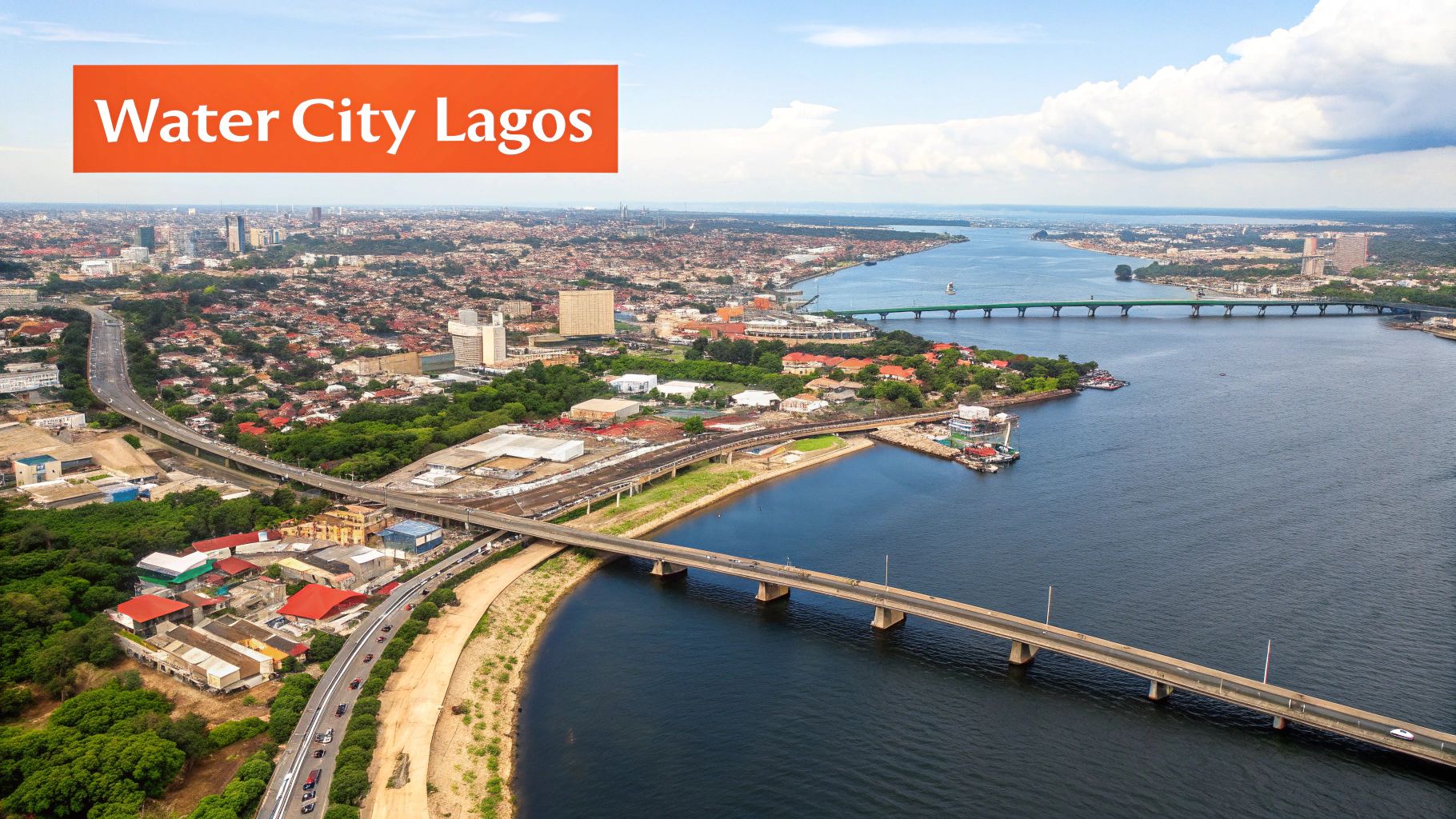
alt text: An aerial photograph of the Third Mainland Bridge in Lagos, Nigeria, spanning across the Lagos Lagoon with the city’s skyline visible in the distance.
This video provides a stunning aerial perspective of Lagos, highlighting its unique relationship with water.
What You Can Do With This Information
The unique geography of Lagos presents specific challenges and opportunities for businesses in logistics, real estate, and urban planning.
Practical Example: A logistics company operating in Lagos can develop a multi-modal delivery system that combines delivery vans for mainland routes with smaller motorbikes and even delivery boats to navigate the island districts and bypass the city’s notorious traffic. This directly addresses the geographical constraints and provides a competitive advantage.
5. Nigeria is the Giant of Africa in Sports
Another one of the most amazing facts about Nigeria is its undisputed dominance in the African sports arena. The nation’s passion for athletic competition is legendary, and its track record of success, particularly in football, solidifies its status as the “Giant of Africa.”
Nigeria’s national football team, the Super Eagles, has won the Africa Cup of Nations (AFCON) three times. At the Atlanta 1996 Olympics, its U-23 team became the first African nation to win gold in the football event. This legacy continues with modern stars like Victor Osimhen. Beyond football, Nigerian athletes consistently excel on the world stage in disciplines like athletics and boxing, with figures such as Tobi Amusan and British-Nigerian Anthony Joshua inspiring a new generation.
What You Can Do With This Information
The immense popularity of sports, especially football, offers a powerful channel for brand engagement and marketing.
Practical Example: A beverage company can launch a marketing campaign centred around a major football tournament. They could run a promotion where customers find codes under bottle caps to win prizes, sponsor local viewing centres where fans gather to watch matches, and sign a popular Super Eagles player as a brand ambassador. This aligns the brand with a national passion point. Explore some of the best apps for streaming live football to keep up with the action.
6. The Niger River Creates One of the World’s Largest River Deltas
Another of the most amazing facts about Nigeria is its incredible natural geography, exemplified by the Niger Delta. The Niger River, Africa’s third-longest river, concludes its journey in Nigeria by fanning out into a vast delta before emptying into the Atlantic Ocean. This delta is one of the largest in the world, an immense and intricate network of rivers, creeks, and mangrove swamps covering over 70,000 square kilometres.
This vast wetland is not just a geographical wonder; it is the lifeblood of the region and the engine of Nigeria’s economy. The Niger Delta contains Africa’s largest wetlands, is incredibly rich in biodiversity, and critically, it also holds Nigeria’s most significant oil and gas reserves. Major industrial hubs like Port Harcourt and key export terminals such as Bonny Island are located here, driving global energy markets.
This infographic highlights the sheer scale of the Niger Delta, detailing its area, the number of states it spans, and its immense crude oil reserves.
alt text: Infographic showing the Niger Delta’s key statistics: Area of 70,000 sq km, covering 9 states, and holding over 37 billion barrels of oil reserves.
What You Can Do With This Information
The Niger Delta’s dual identity as an ecological treasure and an economic engine creates opportunities in sustainable development, energy, and environmental technology.
Practical Example: An environmental technology firm can propose a project to oil companies in the region that uses drones and AI-powered sensors to monitor pipelines for leaks in real-time. This provides a clear business benefit (preventing costly spills and downtime) while also addressing the critical environmental challenges in the delta.
7. Nigeria is Home to Africa’s Richest Person and Growing Billionaire Class
Among the most compelling amazing facts about Nigeria is its remarkable capacity for wealth creation, exemplified by its prominent and growing class of billionaires. The nation is home to Africa’s richest person, Aliko Dangote, whose net worth is estimated to be over $13 billion. His success, built on a vast conglomerate spanning cement, agriculture, and petroleum refining, showcases the immense entrepreneurial potential within the Nigerian economy.
This concentration of wealth is not limited to a single individual. Nigeria consistently produces more billionaires than any other country on the continent. Figures like Mike Adenuga (Globacom) and Tony Elumelu (Heirs Holdings) have built pan-African empires from their Nigerian bases. Their success stories underscore a key aspect of the Nigerian spirit: an audacious and resilient drive to build and scale businesses against all odds.
This chart showcases some of Nigeria’s most influential business magnates and their primary industries.
alt text: An infographic featuring portraits of Nigerian billionaires Aliko Dangote, Mike Adenuga, and Tony Elumelu, with labels indicating their respective industries.
What You Can Do With This Information
The presence of this billionaire class signals a robust, high-stakes business environment and a growing market for luxury goods and services.
Practical Example: A wealth management firm can create a bespoke service tailored to High-Net-Worth Individuals (HNWIs) in Nigeria. Instead of generic investment options, they can offer specialised advisory on pan-African investments, succession planning for family-owned conglomerates, and philanthropic strategy, directly addressing the unique needs of this demographic.
8. Nigeria’s Tech Scene is Booming with ‘Silicon Lagoon’
One of the most amazing facts about Nigeria is its rapid transformation into a continental tech superpower. Lagos, the nation’s commercial heart, has earned the nickname ‘Silicon Lagoon’ and is now widely recognised as Africa’s leading technology hub. This vibrant ecosystem is a magnet for innovation and investment, with Nigerian startups consistently raising more venture capital than any other country on the continent.
alt text: A futuristic image of the Lagos skyline with digital circuit patterns overlaid, representing the ‘Silicon Lagoon’ tech hub and innovation.
This boom is about producing billion-dollar companies. Nigeria is home to several “unicorns” (startups valued at over $1 billion), such as fintech giants Flutterwave and Paystack (acquired by Stripe), which are revolutionising digital payments across Africa. Other trailblazers include e-commerce platform Jumia and developer-training company Andela. These companies demonstrate the immense potential within the Nigerian tech space, built on solving local problems with global-standard technology.
What You Can Do With This Information
For tech professionals, entrepreneurs, and investors, Nigeria is not just an emerging market; it’s a hotbed of innovation.
How to Get Involved (Step-by-Step):
- Identify a Local Problem: Research common challenges in Nigeria related to finance, logistics, healthcare, or education.
- Develop a Mobile-First Solution: Design a solution that works seamlessly on mobile devices, as they are the primary internet access point for most Nigerians.
- Build a Minimum Viable Product (MVP): Create a basic version of your product to test with a small user group in Lagos or another major city.
- Seek Local Funding and Mentorship: Connect with local incubators like Co-Creation Hub (CcHUB) or venture capital firms that understand the Nigerian market.
- Iterate and Scale: Use feedback to refine your product and develop a strategy for pan-African expansion.
Learn more about the advancements of AI in Nigeria and how it is powering this technological transformation.
9. Nigeria Has One of the World’s Youngest Populations
Another of the most amazing facts about Nigeria is its incredible youth demographic. With a median age of just 18.1 years, the nation has one of the youngest populations on the planet. This means over 70% of its citizens are under the age of 30, creating a vibrant, dynamic society brimming with energy and potential.
This demographic reality presents a massive “demographic dividend”—a vast human resource pool that can drive innovation and economic growth. This is already evident in Nigeria’s booming tech scene, where young entrepreneurs are creating globally recognised startups, and in its creative industries, where young artists are shaping international trends.
The challenge is to adequately equip this generation with the skills and opportunities needed to thrive. For many young Nigerians, excelling in critical examinations is the first step towards unlocking their potential. Learn more about how students can use AI to score high in JAMB and other exams to gain a competitive edge. Ultimately, harnessing the power of its youth is the single most critical factor in determining Nigeria’s future.
What You Can Do With This Information
This youth bulge represents the future of consumer markets, labour forces, and creative trends. Businesses that understand and cater to this demographic will succeed.
Practical Example: An ed-tech company can create a mobile learning platform that offers affordable, gamified courses to help Nigerian youth prepare for university entrance exams (like JAMB) and learn digital skills like coding and graphic design. This directly serves the aspirations of millions of young people and addresses a critical need in the market.
Actionable Takeaways
- Localize Your Strategy: With over 500 languages and immense cultural diversity, a single, standardized approach is ineffective. Tailor marketing, products, and services to specific regions and ethnic groups.
- Embrace Mobile-First Design: The vast, young population accesses the internet primarily through mobile devices. Your website, app, or service must be optimized for a mobile experience.
- Tap into Cultural Exports: Nollywood and Afrobeats are not just entertainment; they are powerful marketing channels. Collaborate with creators and align your brand with cultural trends to build authenticity.
- Solve a Tangible Problem: The most successful Nigerian startups (like Flutterwave and Paystack) address fundamental local challenges. Focus on providing real-world solutions in sectors like finance, logistics, or education.
- Invest in Youth: Whether through employment, training, or consumer products, focus on Nigeria’s under-30 demographic. They are the country’s biggest asset and your future market.
Tools & Further Reading
Tools & Resources
- Stears Business: An intelligence company providing in-depth data and analysis on the Nigerian economy and business landscape.
- TechCabal: A leading publication covering the African tech ecosystem, with a strong focus on Nigeria’s startup scene.
- RichlyAI: An AI-powered platform to help you create content that is culturally relevant and optimized for diverse audiences.
Further Reading
- Best business ideas in Nigeria – Explore viable business opportunities in the Nigerian market.
- Advancements of AI in Nigeria – Understand how technology is shaping the future.
- The Economist: “Nigeria’s Economy: Africa’s New Number One” – High-quality external analysis of Nigeria’s economic landscape.
